
Nearly everyone, including almost all governments, accept that climate change is happening. The major cause is the activities of humans – primarily by obtaining and burning fossil fuels, deforestation and agricultural practices.
We are seeing:-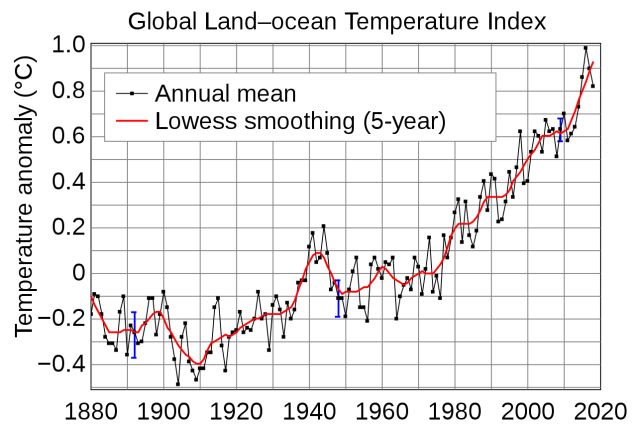
- Average world surface temperatures increasing virtually year on year, now almost 1degC above pre-industrial levels (see graph).
- Sharp reductions in Arctic sea ice coverage and Antarctic, Greenland and other glacier ice volumes.
- More frequent extreme weather events
Here in UK there will be:-
- Greater likelihood of “nice” hot summer weather, which impacts crops and water supplies.
- Greater likelihood of flooding events and moorland fires.
- Future likely serious impacts due to immigration from parts of the world where water supply and food issues will become life threatening.
- Likely adverse health and ecological impacts.
It is generally considered that a rise in average global temperature of 1.5degC above pre-industrial levels is likely to cause impacts which will become increasingly serious. To put this into perspective, the last time such temperatures were only 3degC higher, some 4 – 5 million years ago, it is thought that sea levels were some 20 metres higher than now and that there was no ice in Greenland.
Scientists have calculated the quantity of greenhouse gases (mostly carbon dioxide) emitted to the atmosphere which is likely to cause a temperature rise of 1.5degC. It is sometimes called the world’s carbon budget.
In the UK on average we directly emit 6.7 tonnes of carbon dioxide per person, in India the figure is about 1.7 t, and in Sub-Saharan Africa it is about 0.8 t. Quite a difference! It would seem reasonable that standards of living in those and other parts of the world of similar wealth levels should rise. As we live now, an increase in living standards almost inevitably means an increase in emissions and in consumption of finite resources.
Should our living standards continue to rise as well? Do most in the UK really need to get richer, at the expense of some of our fellows here and the majority of those in less developed countries? If this continues, not only will climate change be exacerbated, but those resources will run out. So developed economies must reduce their greenhouse gas emissions and consumption of resources more quickly than those still developing.
How can this be achieved? As individuals we can:-
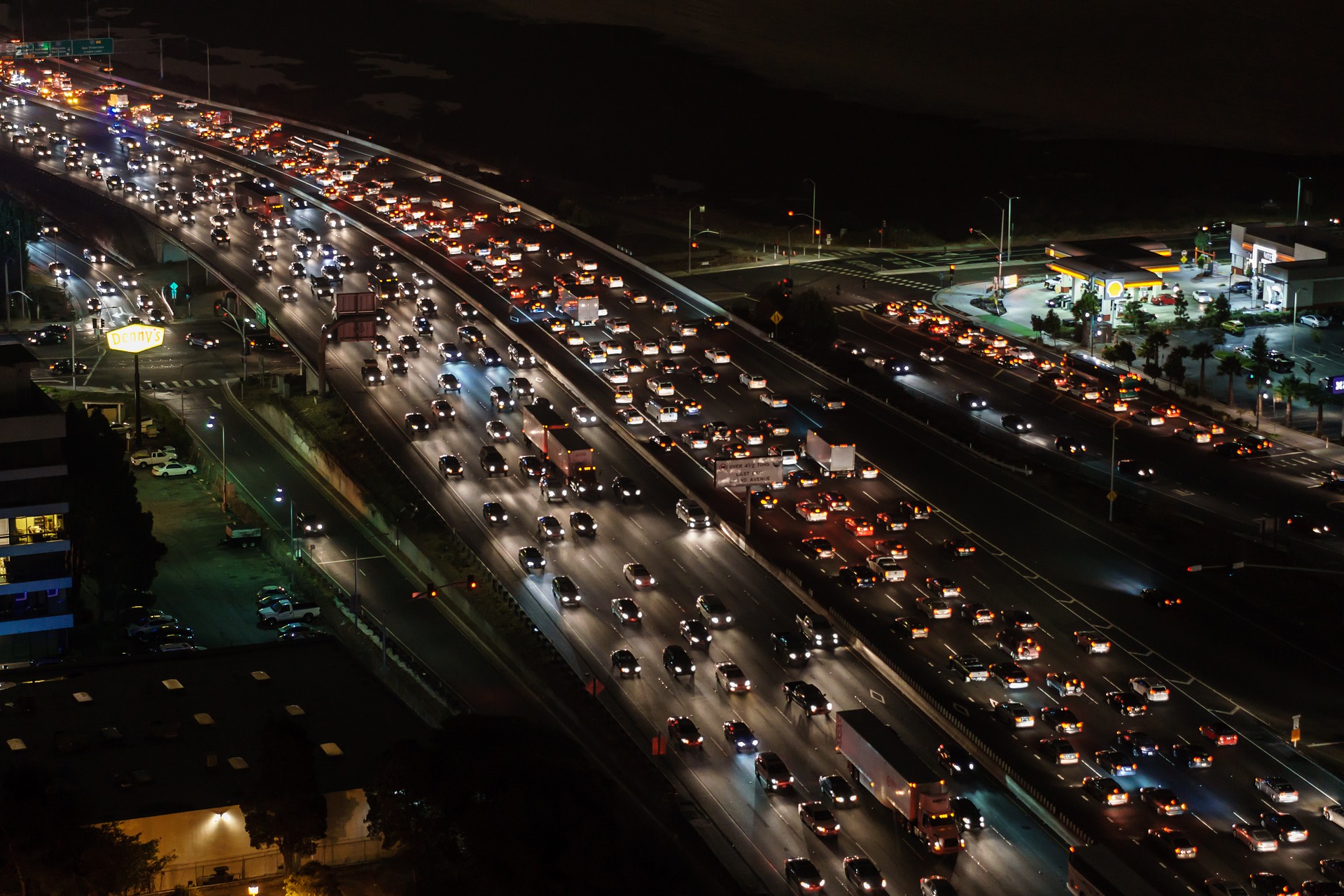
- Cut down on activities that cause significant greenhouse gas emissions, such as flying and car travel.
- Use public transport where possible.
- Reduce home energy use with good insulation and lower central heating temperatures.
- Cut down on meat. Eat locally produced, in season, food, and avoid food that has been flown to the UK.
And we can put pressure on the government to encourage the above, by whatever means, but also to:-
- Encourage renewable energy schemes on land and in the sea, as well as offshore wind.
- Encourage carbon capture and storage technology for medium term fossil fuel power generation.
- Invest more in public transport (buses and trains).
- Encourage all housing, new build and existing, to be much more energy efficient.
- Discourage further fossil fuel exploration and extraction, such as fracking.
- Discourage further growth in aviation.
As we use our bit of the carbon budget, particularly if it is a large bit, perhaps we could give a thought to the poor African farmer or Indian slum dweller who will be requiring a fairshare of the carbon budget to improve their life. There’s only a fixed amount, which we must all share, if we are to avoid a climate disaster.