
We are delighted to hear that the proposed solar farm in Bishop’s Waltham has been given the green light by Winchester City Council’s planning committee.
The City Council’s Planning Committee has approved an application for a solar farm at Locks Farm, Bishop’s Waltham by the overwhelming majority of 8 to 1. WinACC applauds City planning officers and councillors for standing up to the mountain of paperwork submitted by objectors.
During the period of consultation, a relatively small number of local organisations and households bombarded City planning officers with lengthy documents detailing every conceivable argument against solar farms. In particular they insisted that solar development should be confined to rooftops and brownfield sites.
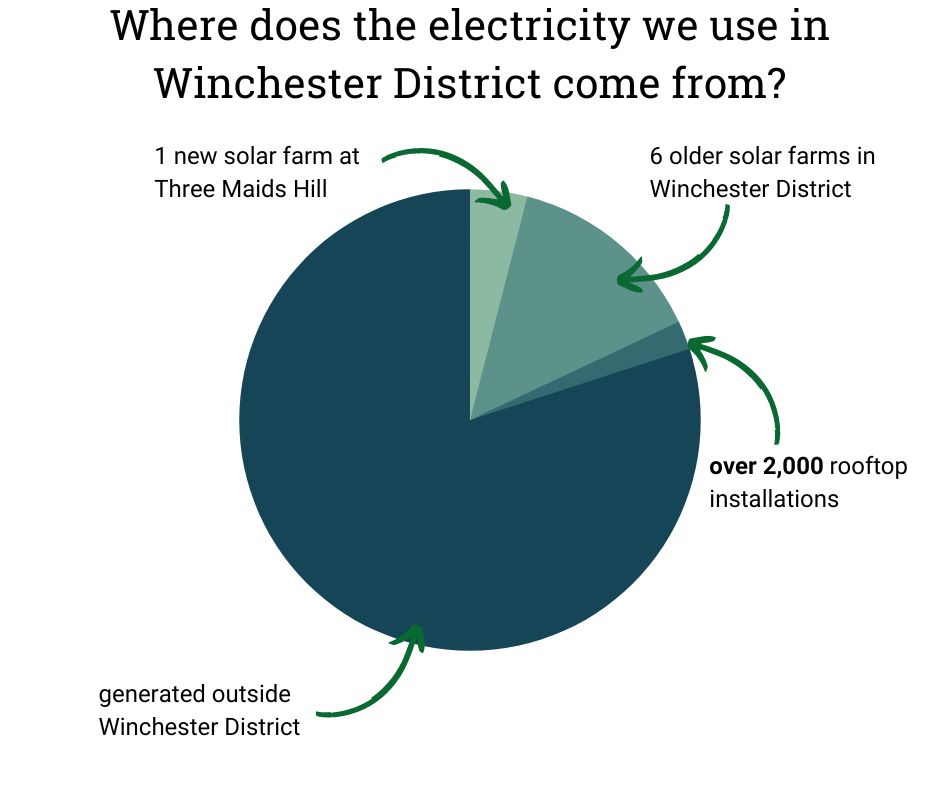
During the meeting, WinACC explained to the Committee: “for those uncomfortable with greenfield sites for solar, we have to observe that this single smallish solar farm will generate more electricity in any given period than all the rooftop solar that has been installed in our District in the two decades since the technology came to market. The maths tells us we have no choice.”
After a site visit on the day preceding the meeting, and then three hours of debate, the Committee expressed sympathy for objections from households located closest to the development. But ultimately councillors from across the political divide interpreted support for the plans by Bishop’s Waltham parish council as the broader reflection of local opinion.
The Committee was also doubtless aware of how the UK energy security crisis, in parallel with unaffordable prices for ordinary households, has boosted public support for large scale renewable projects. The government’s quarterly Public Attitudes Tracker recently found that 81% of respondents said they would be very happy, fairly happy, or would not mind, if a solar farm was constructed in their local area.
This outcome of the Locks Farm application represents a landmark for the Council’s commitment to carbon neutrality by 2030. The Committee chair, Therese Evans, reflected: “if a declaration of emergency is going to mean anything, we have to take tough decisions.”
Recent years of patient advocacy by WinACC in visualising the reality of a zero carbon electricity grid came through in some of the closing statements by Committee members. Councillor Westwood prefaced his remarks by observing: “the District needs at least a sixfold increase in solar capacity to meet the District’s climate change targets.” The chair agreed: “there will be many more of these applications,” she said.
WinACC is heartened by all those who took the trouble to express support for the plans though the formal planning channel. The case officer’s report to the Committee noted 38 responses supporting the amended plans, more than three times the 11 objections.
We have written a number of further articles about the importance of solar farms:
Reasons to support solar farms – and answers to your concerns
Solar farms are essential to meet climate change targets
Every parish can learn to love solar farms