
A group from WinACC visited the Three Maids Hill solar farm on 19 April 2023. The visit was organised by Bill Gunyon of the WinACC REAG Action Group and hosted by the site operator Enviromena’s Head of Technical Services Gary Saunders.
We had the opportunity to walk around the site and were lucky to be able to ask Gary numerous questions.

The solar farm is nominally rated at 27 MWp (peak output). The actual annual electrical output is estimated based on how efficiently the solar panels are expected to convert the sun’s energy, the estimated annual sunlight at the location and other factors including measures used to generate a consistent output as conditions vary. The solar farm occupies 110 acres (0.17 square miles). The site is leased from a local farmer by Enviromena. The Hampshire Chronicle reported the solar farm can power 9,500 homes and save 6,800 tons of CO2 emissions annually.
This solar farm uses state of the art solar panels that can absorb sunlight on both sides. These are expected to have a lifetime of well over 35 years. It was pointed out that if the solar farm was sited Southern Europe, for example, the panels could produce considerably higher output due to the more intense sunshine, although they wouldn’t last as long.
There is no battery storage – all the electricity is delivered directly to the national grid at 33,000 V – standard for this kind of installation. To achieve this the electricity must first be converted from DC to AC using an inverter, before being raised to required voltage using a transformer (fortunately a very efficient process).
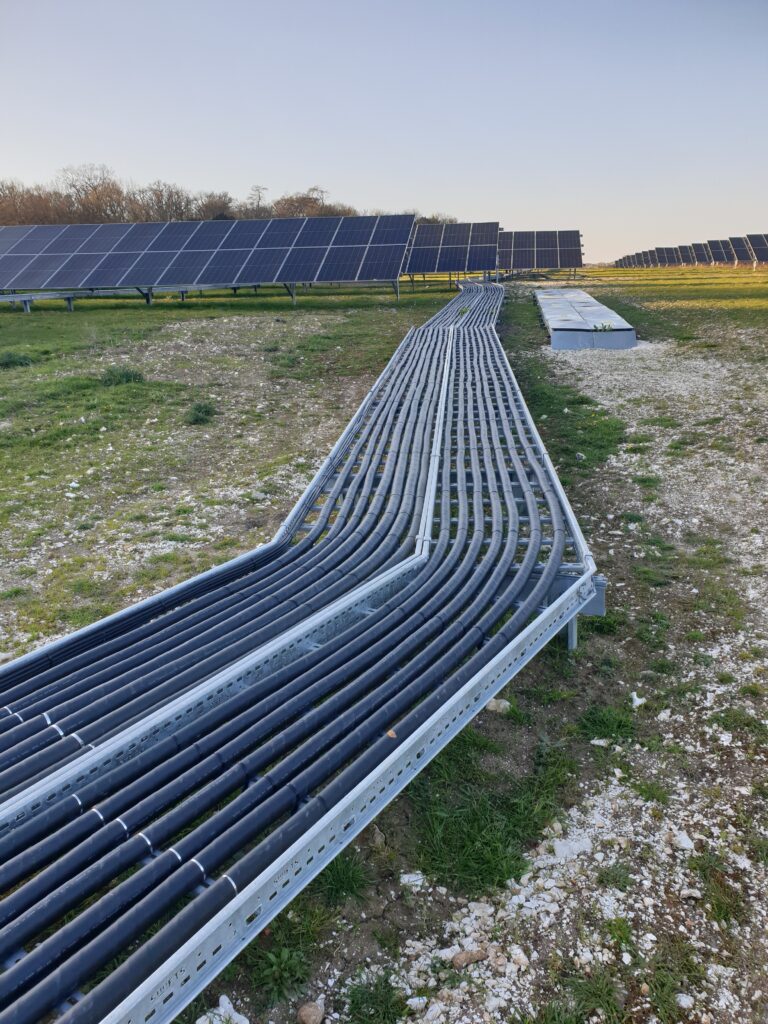
Gary noted the importance of minimizing the voltage drop along the fairly long distances across the site, aiming at less than 1% drop which reduces the energy lost through transmission onsite. This is achieved using thick cables, so the electrical resistance is low. The cost of these cables is reduced by using aluminium (also cheaper and less likely to be stolen than copper!).
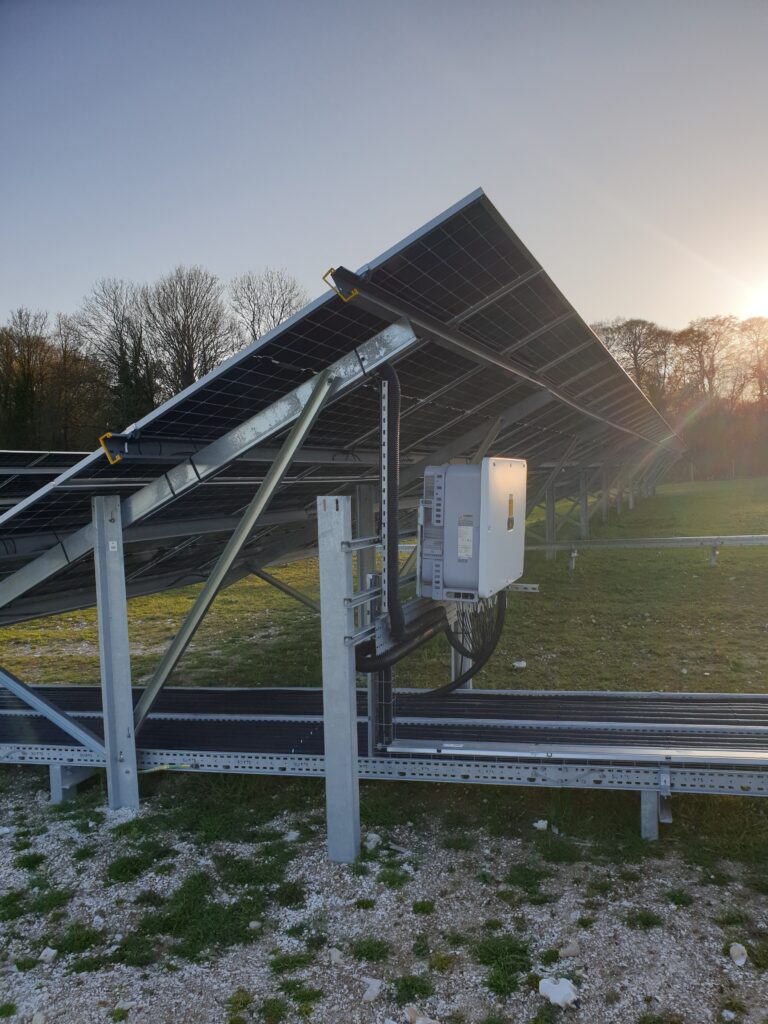
A sophisticated control system dynamically balances energy production across the site – for example when a cloud passes over the site – using microprocessors.
People asked about environmental management of the site. Apparently, sheep do not chew the cables, but they do rub up against the supports, so the cables are wrapped so they aren’t damaged in the event sheep are allowed onsite. The site has been planted with wildflower mix and at the moment mowing is undertaken once per year to maximise biodiversity benefits. If you want to see the chalk grassland developing the path next to the site is available for walkers. The panels are regularly cleaned and the site is monitored continuously for security.
There are various points of archaeological interest within the field and Enviromena was required to pay a considerable sum for a survey before commencing work. Arguably the solar farm is less damaging than the ploughing that was previously occurring.

Overall, everyone agreed this was a very worthwhile visit, especially for those of us without much previous knowledge of the workings of such installations.
Robin Speed June 2023