
WinACC members met prospective parliamentary candidates, one at a time, earlier this year to find out where they stand on the climate crisis.
Each prospective parliamentary candidate was invited to give a short introduction about themselves and then were asked questions relating to the climate crisis and what they would like to see / do if they were elected to represent the Winchester constituency. Although the questions were not identical, common themes were put to each candidate.
We met:
Danny Chambers, prospective parliamentary candidate for the Liberal Democrat party
Flick Drummond, MP, prospective parliamentary candidate for the Conservative party
Hannah Dawson, prospective parliamentary candidate for the Labour party.
Lorraine Estelle, parliamentary candidate for the Green party has sent written answers to our questions.
The following are notes taken at each meeting.
February meeting with Danny Chambers, prospective parliamentary candidate for the Liberal Democrats.

Introduction from Danny Chambers:
My major reason for going into politics was the need for more people with scientific and technical backgrounds to be represented in parliament. The biggest challenges to humanity right now are scientific challenges, which is why I want to be in politics. You don’t need to convince me to take action. What I need from you is what action to take!
Q – why are you the best candidate for the Winchester constituency?
A – When the Liberal Democrats were in coalition they quadrupled renewable energy generation. We brought the green agenda to the coalition.
In a cost of living crisis there is still a moral imperative to to go greener faster – it’s the cheaper option!
Liberal Democrats are still aiming for 80% renewable energy generation by 2030.
Using the ‘apollo analogy’ if we invest heavily in renewable energy this will drive the economy. We should be selling our excess renewable energy to the rest of the world, not importing it!
Q – How would you ensure that we follow through with reducing consumption of goods?
A – We consume goods that are manufactured abroad, and we need to take our historical emissions into account. The moral requirement is that we reduce our emissions.
There are many alternatives to measuring success other than GDP – donut economics and the circular economy are two such alternatives. We need to look at our consumption at a global level and encourage global cooperation.
If you are concerned about immigration then you should also be concerned about climate, as climate change will drive immigration.
Q – If you are elected how will you represent all constituents, even those who didn’t vote for you?
A – I will represent all constituents, no matter who they voted for. Standards in public life are at the lowest they’ve ever been and that needs to change.
Good ideas come from everywhere, I’m interested in evidence not ideology. The Liberal Democrat manifesto is the only one where the economy is credible.
Q – How will you ensure that public transport is available and how will you discourage people from flying as it causes so many harmful emissions?
A – Avoiding flying is a simple solution that’s not easy to implement. It takes a huge personal and financial cost to avoid flying – which I advocate personally .People who are frequent fliers should be paying the tax on that.
It should always be cheaper and easier to take public transport. Air quality improves with better uptake of public transport. Our public transport system needs a 10-20 year investment.
Q – What do you think should be done with the Bushfield site?
A – I don’t particularly want to see anything happen at Bushfield on a personal level. If something has to happen it should have the least possible impact on the environment. The big issue with proposals for the Bushfield site is road infrastructure and pollution and congestion. I would love to see better environmental standards on buildings before anything is done. Definitely not approve anything that increases carbon emissions. Biodiversity needs to be at the core of it.
Q – We still don’t have climate change at the heart of planning and infrastructure laws, what will you do about that?
A – We need new thinking on infrastructure.
Final comments from Danny
I want to highlight the links with farming and methane in parliament. I’m also deeply concerned about water quality, in particular the flea and tick treatments from pets ending up in streams and the impact on biodiversity.
March meeting with Flick Drummond MP, Parliamentary candidate for the Conservative Party.
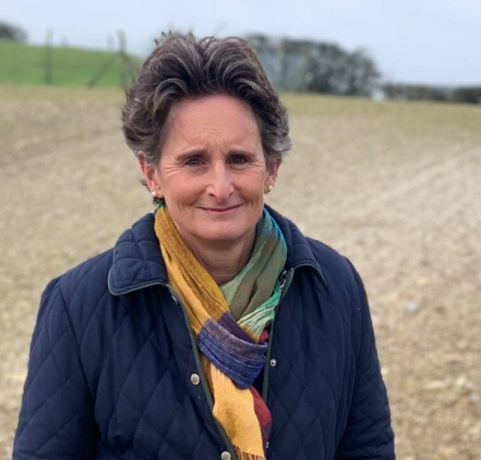
Introduction by Flick Drummond
I focus on the opportunities afforded by Brexit, that we have adopted a lot of EU rules but we also have the opportunity to implement our own. The new environment act 2021 is a good example of this, it’s good for air quality. I am also making tackling storm overflows a priority.
Q – What was your reaction to Chris Skidmore leaving his post as net zero minister?
A – It was disappointing to see him go but we are continuing the programme, we still have good ministers working on climate issues.
Q – We are baffled that Rishi Sunak describes himself as on the side of the motorist, how does this square with the climate crisis?
A – He was talking about the fact that the electric car infrastructure isn’t there yet. I also see some hope for hydrogen cars in the future, just changing a hydrogen fuel cell rather than spending hours charging a car from electricity.
Q – Low traffic neighbourhoods have proved to be controversial, what’s your opinion?
A – I would prefer we go down the public transport route. Although I am keen for hydrogen cars.
Q – We’ve seen a number of ambitious policies in recent years, but we’ve often seen them delayed, why is that?
A – I’ve been pushing for the bottle deposit scheme for years, having lived abroad I’ve seen it work. I think that we are in the process of working out how to make it pay.
Brexit had a massive impact on the progression of policies, it took too many people out of different departments to work on it and timescales on other issues slipped.
We’re still paying back the money used to keep people in jobs during the covid pandemic, and the reality is there is a lack of money available to fund new policies, although green technology could generate money.
Q – What can we do as a country to encourage smaller, local nuclear sites?
A – I think nuclear power is the way to go, we currently import nuclear energy from France who have got to grips with the smaller nuclear reactor model. I feel sorry for people who live near solar farms as the glint from the panels can be really awful. Planning laws should remain focused on local people.
Q – If I want to see a reduction in the use of fossil fuels who should I vote for?
A – I will continue to press for more subsidies to help people move away from fossil fuels.
Q – Are you in favour of expanding airports?
A – I was in favour of expanding Eastleigh airport as it is going to keep to the same number of planes as before, just bigger ones that can take more people.
With regard to the Gatwick expansion, we are now moving towards a cleaner way of flying – after all we can’t stop flying. Taxation and carbon trading won’t put people off flying. I’d rather see more improvements due to better technology. The more money we can put into green technology the better.
Q – What do you think should happen to the Bushfield site?
A – Did you know the Liberal Democrats want to build a new hospital there? I think people should use the park and ride to access Bushfield. I’m not keen on much building there.
Final comments from Flick
I’m a one nation Conservative. I would find it very difficult to remain in the Conservative party if the majority of good people left. We need good people to remain in the party. You are far more likely to get things done if you work with people rather than against them.
I’m a team player but I’m not afraid to rebel, and I will make it clear when I intend to do so.
I know more about education, defence and foreign policy than I do on environmental issues so I’m happy to be educated and hear people’s views.
April meeting with Hannah Dawson, parliamentary candidate for the Labour party
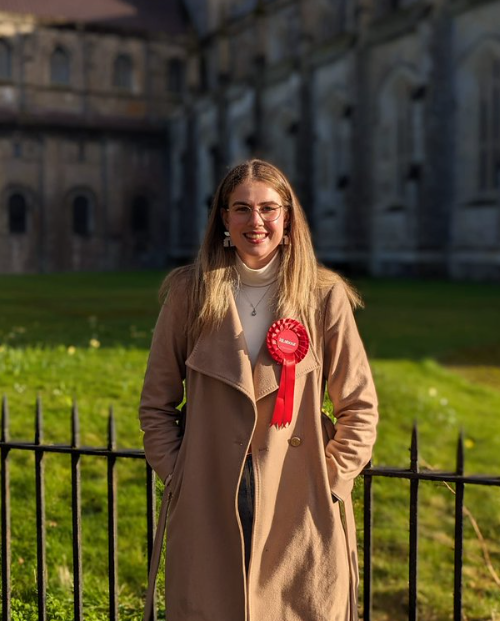
Introduction from Hannah Dawson
I previously worked as a civil servant with a role in communications. I felt the frustration of not being able to influence policy decisions. I joined the local Labour party in Winchester as a way to influence policy.
Climate is personal to me, I’m young and it’s my generation that will feel the impacts the most. We need to talk about climate change as an extinction event. We need to be realistic but we also need politicians with backbone.
We need politicians who understand the climate crisis but can talk about it in business language.
The Labour party policies on climate are credible, they are a priority for a Labour government and the part of politics that I am most passionate about.
They include:
- Clean energy and GB energy
- Changing to a green economy
- Retrofitting homes plan.
Q – What is the relevance of a Labour candidate in Winchester?
A – If we get a Labour government then demonstrating that locally we have a good share of the vote will give us a good voice. There is no such thing as a wasted vote. I will be campaigning to reach the politically disaffected in this constituency.
Q – What are your views on farming and food security?
A – We’ve been unable to plant many crops this spring due to the levels of rain we’ve had. We need to support our farming communities with significant subsidies to transform to a sustainable model of agriculture. Farming needs to work to reduce methane emissions, along with better carbon capture in the soil. We can’t decouple farming from net zero.
Q – If you get the chance to take part in a hustings debate with other parties, how will you raise climate?
A – Climate is my number one priority. As a communications professional I have the skillset to get the issue that matters to me in front of the right people. The ways to do that include:
Talking about public transportation, we need to incentivise people to use it.
Greater EV infrastructure, I appreciate that it is not as good as public transportation but it’s better than the status quo.
State of our waterways, this is a great way to get nature on people’s radar. If we tackle climate without nature then we will have nothing to live for. We need to protect natural sites and biodiversity.
Q – What is your position on wars in Ukraine and Palestine from a climate perspective?
A – The climate impacts of war are often overlooked, we need to factor the climate into policy decisions.
We need to embed climate into every single government department rather than have it as a stand alone department.
Q – What can we do to help you influence government if labour get in but you don’t?
A – Labour policy forums happen yearly that I can feed into. I am building relationships with other Labour candidates across the south coast who are likely to get into government, I will keep talking to them.
We need to make as much noise locally as we can about the climate.
Q – What would you argue for the Labour party to do with government road building commitments?
A – Look at what Labour are already doing. Labour in Wales have cancelled new road building. Labour are sticking with ULEZ in London.
We need to transform public transport systems, renationalise the railways.
We need to also remain realistic, maintain the current roads whilst increasing and transforming bus services. This will all take time.
Q – How would you like a Labour government to tackle the M3 Junction 9 proposal?
A – Ideally I’d cancel them all, however we need to be realistic, Labour have a lot to do and some things will take longer than others.
Q – What are your views on planning and new housing?
A – I used to work in the department for levelling up, I am pro-house building, my generation can’t buy a house or afford to rent. New planning needs to keep climate at its centre and current biodiversity impacts don’t go far enough. Nutrient neutrality also needs to be stronger. We need to accelerate house building on grey land. No more delays. All houses need to be built to higher standards with solar panels and heat pumps as standard along with above industry standard insulation. We need to build communities, not just homes.
Q – What’s your view on the oil pumping at Avington and renewable energy in general?
A – I support solar farms and offshore and onshore wind are a priority.
There was no opportunity for Hannah to add final comments as the meeting ran out of time.
Lorraine Estelle, parliamentary candidate for the Green
party

Introduction from Lorraine Estelle
I have been inspired to stand as a parliamentary candidate because I think that everyone should have the opportunity to vote Green. I am dismayed by the low priority that the other political parties have given to the climate and nature crises and the environment. A vote for Green is a vote for change and a fairer
sustainable greener country.
Q –What is the relevance of a Green candidate in Winchester?
Having a Green Party candidate in Winchester is essential in providing people with the opportunity to use their vote to show that Green policies are important. We have seen how votes for minority parties can influence the National agenda and a vote for Green will give voters a voice. Those votes will support the new Green MPs who will push the next government for bolder real changes to confront the big challenges our country faces. The Green Party has attracted voters from all main local parties who are disappointed with old politics and want to see Real Change that gives them Real Hope.
Q – What are your views on planning and housing?
The Green Party has already laid out some of its plans to end the housing crisis including protection for renters through rent controls, an end to no-fault evictions and a transformation of the planning system so that new developments come with great community services.
We need to build houses for those who need them most in the right place with the right infrastructure that minimises the need to travel and links well with public services and workplaces. Council houses need to be protected from being sold off privately to preserve them for those who cannot afford to buy these places at market prices. We need to reverse the trend that houses are increasingly used as financial commodities rather than to provide a roof for everyone to live under.
When new houses are built or retrofitted, they must be material, water and energy efficient with the least impact on the environment. Building practices without these approaches worsens the current climate and nature crises. The absence of energy efficiency and levels of comfort causes high levels of fuel poverty and contributes to physical and mental health problems.
In terms of planning, here in Winchester, the proposed development of Bushfield Camp is unacceptable. The proposed development will increase the impact of traffic, noise and pollutant emissions with a loss of biodiversity. While new council houses are desperately needed, we need to prioritise brownfield sites in sustainable locations. In the case of Bushfield, the evidence is not clear that we need the development of business and employment spaces when so many buildings stand empty in Winchester City Centre.
What are your views on farming and food security?
This year we have seen warm and wet weather which has had a terrible impact on farmers who are unable to get onto their land and prepare it for crops. These conditions will cost farmers millions of pounds, fuelling increases in the price of food. There is an immediate need to help farmers mitigate the impact of this climate change. In the longer term, we need to consider that the rearing of animals for meat and dairy production is a major driver of climate change and identify improved measures to encourage a healthy plant-based diet.
Farmers who encourage wildlife and organic farming methods in their fields must be supported to help them grow. We would like to see more farms like Rushmore Farm near Hambledon to commit to the transition towards sustainable organic farming that enhances our local soils.
Q – What’s your view on the oil pumping at Avington and renewable energy in general?
I am terrified that a proposal to reopen an oil well near Winchester and in the South Downs National Park has been approved, and that this appears to have been done very quietly. We should only support renewable sources within the UK providing security of supply and replacing fossil fuels.