
Contents
- Introduction
1.1 Project Summary
1.2 Year 1, 2021 – 2022
1.3 Years 2 and 3, 2022 – 2024 - Group Support and Development
2.1 Local Groups
2.2 Climate Café
2.3 Group Support
2.4 Network Events
2.5 Knowledge Hub
2.6 Newsletter
2.7 Group Communications - Links to Local Authorities
3.1 Parish Councils
3.2 Winchester City Council
3.3 Hampshire County Council - Project Structure
4.1 Advisory Board
4.2 Project Staff
4.3 Funding - Group Activity
5.1 Domestic Energy
5.2 Community Energy
5.3 Waste Prevention
5.4 Travel and Transport
5.5 Food
5.6 Stall at Events
5.7 Eco Fairs
5.8 Climate Fresk - Research
- Next Steps
- Appendix
8.1 List of WeCAN Groups
1. Introduction
1.1 Project Summary
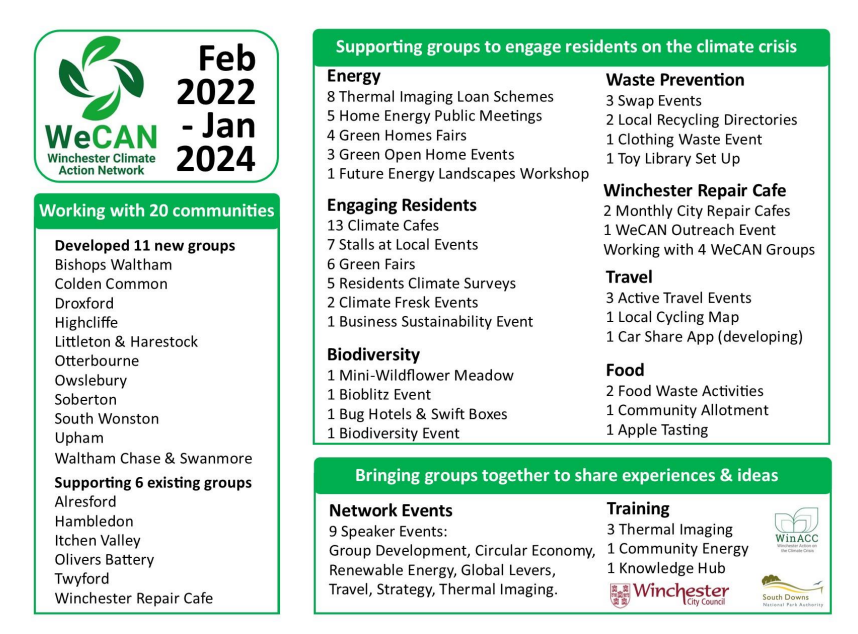
The Winchester Climate Action Network (WeCAN) project was launched in February 2021, to create a supported network of communities across Winchester District taking action on the climate crisis. A key element of the approach was to work with parish councils, a local democratic structure embedded in the community, with links to the city and county councils and some access to funding. Existing community groups with an interest in the climate crisis were also targeted. The aim was to provide support to individual groups and to also create a structure to enable the groups to share information and experience with each other.
1.2 Year 1, 2021 – 2022
Funded by Winchester City Council (WCC) and delivered by the Centre for Sustainable Energy (CSE) in partnership with Winchester Action on the Climate Crisis (WinACC), activity was focused on initial engagement with all 48 parish councils, plus several community groups already working on climate issues. A baseline survey was carried out to identify the type of climate action (if any) they were taking, their priority environmental issues, and the type of support they wanted. Three online events were held through the year, to start the process of sharing ideas and experiences and building a sense of community.
Using CSE’s Impact tool we produced a carbon footprint report for each civil parish and urban ward to help guide climate action towards activity that would have the most impact on reducing carbon emissions – the reports can be downloaded from https://www.winacc.org.uk/carbonimpact-reports-for-parishes-in-winchester-district/. CSE and WinACC then delivered two climate action planning events to help groups identify what they could influence in their communities.
A report on Year 1 was produced in March 2022 and can be downloaded at https://www.winacc.org.uk/wp-content/uploads/2022/05/cse-report-for-wcc_wecanproject_march-2022_final.pdf . Key findings were that most parish councils and many community groups were already taking climate action, or would like to, and that there is great value in bringing people together. Insights going forward included that WinACC and WCC should support the core of actively engaged parish councils and community groups and communicate their experiences to those less actively engaged.
1.3 Years 2 and 3, 2022 – 2024
Years 2 and 3 were funded by the South Downs National Park Authority (SDNPA), WCC and Winchester Rotary and delivered by WinACC. A part-time (2 days/week) project officer was employed to build on the work carried out in Year 1 and develop a strong sustainable learning community for people across the district to share ideas and implement projects. The project budget included the costs of delivering 4 learning events a year, a total of 20 days of professional expertise plus equipment and IT. The project officer role enabled a more intensive, grassroots approach, working directly with engaged parish councils and groups and encouraging less engaged communities to develop new groups. Network events were also organised, bringing in speakers from other organisations to showcase successful activity and allowing participants to meet and to share experiences and ideas.
2. Group Support and Development
2.1 Local Groups
Support was provided to 6 existing groups, helping them to develop their activities and projects. 11 new groups were supported to establish – see appendix on p11 for the complete list. Of the 86,500 people living in the 48 civil parishes outside the city, 31,400 (36%) now live in a parish where there is a WeCAN group.
To develop new groups, initial contact was made with any interested parish councillors and/or residents. A small group was then supported to organise a climate café event, to attract more residents interested in taking climate action. A more structured open meeting followed the climate café event, a few weeks later, to establish the structure and aims of the new climate action group.
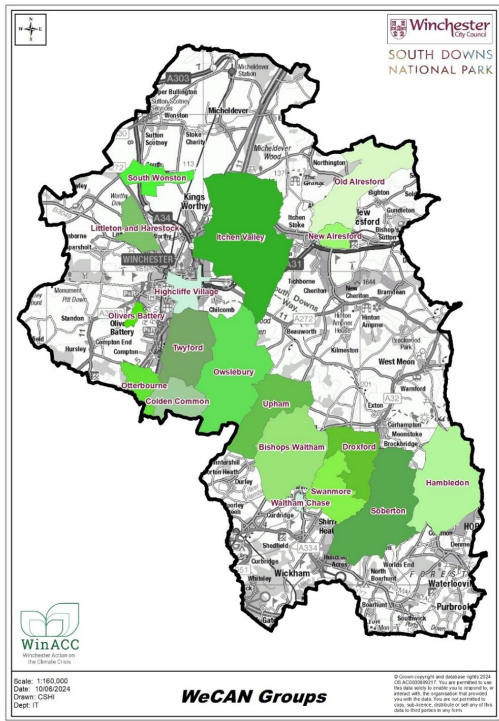
Map of Winchester District showing civil parishes with a WeCAN group
The varying shades of green are only to aid visual definition
2.2 Climate Cafe
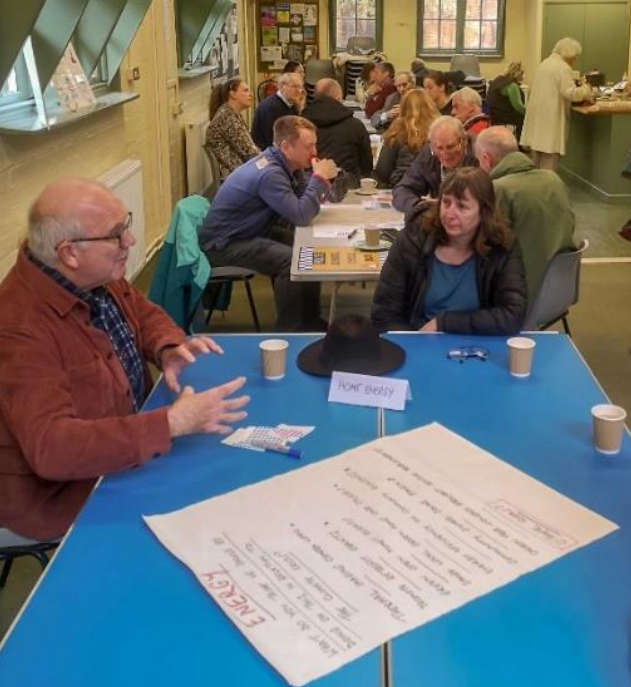
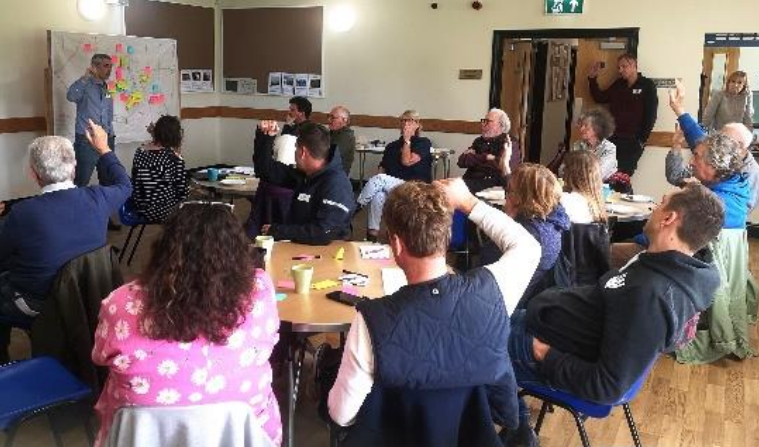
The climate café acts as an engagement and recruitment tool for developing new groups. It is a structured but informal event with facilitated small group discussion on climate crisis issues. The format consists of four or five hosted tables, each with around 6 seats. Each table is focused on a particular sector of emissions, such as Energy, Transport, Waste and Food. The host starts by encouraging discussion around personal experience of that sector, in relation to the climate crisis, then moves it on to looking at possible community projects that could engage residents in reducing their emissions. After a fixed period of time (usually 20 minutes) participants move to a different table. Everyone is encouraged to complete a contact form and to attend a follow-up meeting a few weeks later, to establish the new group.
2.3 Group Support
The first formal meeting is used to establish a consensus on group aims and structure and to look at initial projects and activities. Key roles in the new group are agreed and filled. Where numbers and interest allows, sub-groups are set up to work on distinct themes or projects.
Support by the project worker is intensive at this stage, both in group meetings and mentoring the chair and project leads. Advice is given on identifying and applying for suitable funding. Support is provided around project development, group development and communications (internal and external). Groups are signposted to useful links and information plus other groups that have developed similar activities.
2.4 Network Events
Regular network-wide events were a key tool for informing and inspiring groups and also providing an opportunity for them to meet and share experiences and ideas, both formally and informally. Each event had a particular focus on an aspect of the climate crisis and speakers were chosen who generally had practical experience in developing climate crisis related community projects or topics around group development, including:
- How to set up a new climate group
- Renewable and community energy
- EnRoads tool – global levers of influence
- Low carbon travel
- Thermal imaging training
- Energy Champion training
- Community energy & solar feasibility study training
- Circular Economy – repair cafes, sustainable fashion
- Communications – how to set up a website, using social media effectively
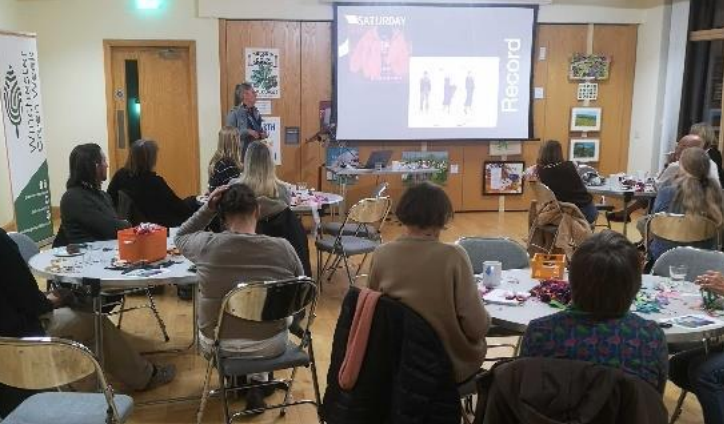
Two network events were also held on group strategy – facilitated meetings where group leaders came together more formally to share strategy and identify opportunities for joint projects.
2.5 Knowledge Hub
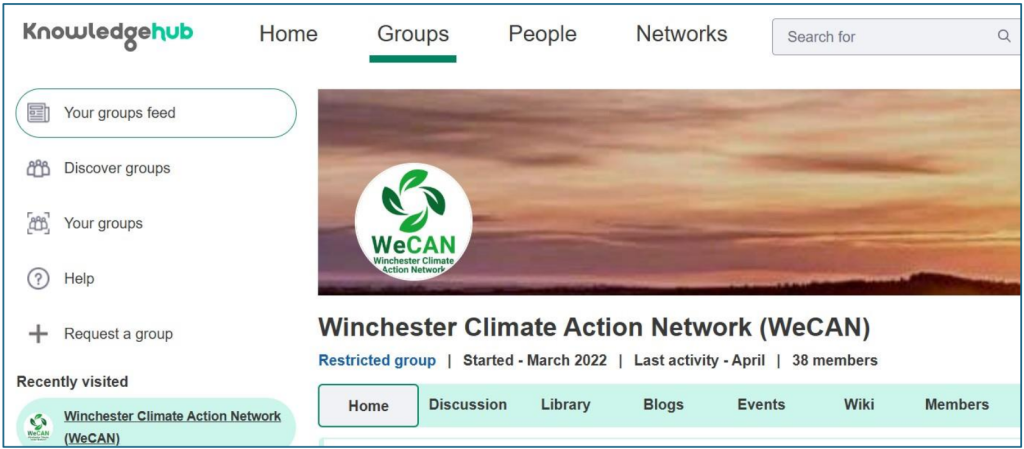
A key recommendation from the year 1 WeCAN project report was to “find a means to enable connecting, learning and sharing of stories and expertise via a digital platform.” A secure online group was set up in year 2 on the Knowledge Hub platform, which is free to use for the voluntary and community sector. The group provided discussion forums and library folders which enabled users to communicate across the network and to upload and view documents. The project worker created several themed discussions and uploaded a range of documents which could be useful for group and project development. Online and in-person training sessions were held to help users navigate the platform and user guides are available on the platform itself.
26 WeCAN group members initially signed up (now 38) to the Knowledge Hub group but very few took part in the discussion forums or uploaded any documents. A survey was carried out in Dec 2022 to identify barriers to using the group – some found it difficult to use, so more training sessions were organised. Research was carried out to find other possible online platforms that could be more user friendly, but the only alternatives either had limited functionality or high subscription fees. Anecdotal feedback was given that group members had little spare time beyond volunteering in their own climate group to be able to spend time contributing to the platform, so a project worker has now started creating and uploading documents for the local groups.
2.6 Newsletter
A monthly email WeCAN newsletter is distributed to members of WeCAN groups, all WCC city councillors and all parish council clerks. At time of publication the circulation list for WeCAN news is 194. The newsletter includes information on recent group activities and projects, upcoming network events and links to resources, funding and training. Past editions can be downloaded at https://www.winacc.org.uk/wecan-knowledge-hub/
2.7 Group Communications
Groups are supported to develop an effective communication strategy to enable them to inform and involve local residents, using social media, websites and local print media. Many have pages on their local parish council or community website, such as:
- Upham Action on the Climate Crisis (UpACC) – https://uphamvillage.org.uk/upacc/
- Green Owslebury (Grows) – https://owslebury.org/grows/
- Highcliffe Climate Action – https://highcliffeforum.wordpress.com/climate-action-inhighcliffe/
Some groups have set up their own website, such as:
- South Wonston Sustainability – https://swsustainability.co.uk/
- Sustainable Waltham Chase and Swanmore (SWaCS) – https://swacs.co.uk/
Links to Local Authorities
3.1 Parish Councils
Of the 11 new groups that were supported by the project to establish, six are working groups of their local parish council. New groups were encouraged to consider the benefits of this arrangement ie linking to an established local democratic structure plus access to budget, banking facilities, insurance etc. Most parish councils were receptive to the approach, recognising the benefit of including local residents working on decarbonisation. Some groups preferred the autonomy of being independent.
3.2 Winchester City Council
Several city councillors take an active role in WeCAN groups, in a personal capacity. Many groups have contact with city councillors who attend parish council meetings in their ward.
3.3 Hampshire County Council
The Littleton & Harestock group received funding from their local county councillor, Cllr Jan Warwick.
4. Project Structure
4.1 Advisory Board
A project board was established at the start of year 2 to oversee and advise on the operation and strategy of the project. The board is a partnership of the main project funders (SDNPA and WCC), members of WinACC’s previous Community Engagement Group, members of WeCAN groups and WinACC project staff. Terms of reference were agreed and meetings are held quarterly. The project officer submits a quarterly project report prior to each meeting.
4.2 Project Staff
Most of the Year 1 project activity was delivered by CSE staff, supported by WinACC’s Executive Director and Communications Manager. Volunteers from WinACC’s Community Engagement Group gave significant amounts of their time to help with project planning and activity.
A WinACC project officer was recruited to develop the WeCAN project in years 2 and 3, employed for 15 hours per week and supported by the WinACC Executive Director for 4 hours per week. The WinACC Community Engagement Group of volunteers was dissolved – its members joined the WeCAN Advisory Board. Towards the end of Year 3, the project officer role was divided between two WinACC staff, each employed for 7.5 hours per week.
4.3 Funding
WinACC is extremely grateful to the three organisations that have provided funding for the WeCAN project – the South Downs National Park Authority, Winchester City Council and Winchester Rotary. Year 1 was fully funded by WCC and Years 2 & 3 were jointly funded by all three organisations.
5. Group Activity
Groups have been encouraged to develop engaging projects that will have an impact on the sectors producing most carbon emissions locally – Energy, Travel, Waste and Food. They also often develop activity around nature and biodiversity.
5.1 Domestic Energy
Many groups have developed domestic energy projects to encourage residents to reduce their energy use and decarbonise their homes:
- Thermal imaging loan scheme – engaging residents in energy efficiency by helping them identify where their homes are losing heat
- Energy Champions – training group members to provide advice to residents improve the energy efficiency of their homes.
- Providing links – to trusted online information.
- Green Open Home events – local residents who have made energy saving improvements open up their homes to share their experiences.
- Green Homes events – 50 people attended a Green Homes Fair run by Itchen Valley parish council, 30 people attended a Green Homes speaker event in South Wonston and 25 people attended a speaker event in Littleton.
Some groups are looking at encouraging larger scale renewable energy generation:
Future Energy Landscapes (FEL) – South Wonston Sustainability obtained funding to pay CSE to deliver a workshop for local residents to look at the acceptability of wind turbines and solar farms in the local landscape. A follow up village-wide survey had 210 responses. Energise South Downs is planning four FEL workshops in other villages in the autumn, using WCC funding.
5.2 Community Energy
Using WeCAN project funding, Community Energy South delivered a community energy training session for WeCAN groups which included instruction on producing rooftop solar feasibility studies. Participants are now identifying possible sites for solar PV community energy projects, both rooftop and land based.
5.3 Waste Prevention
The WeCAN project officer gave some support to the Winchester Repair Café group, which has now set up monthly repair sessions in two city locations. The repair cafe group is helping several WeCAN groups to set up their own repair café events. Owslebury is running repair café sessions; South Wonston, Upham and Littleton & Harestock are planning sessions. Several
groups have set up online local recycling directories, South Wonston held a clothing waste event with help from Winchester School of Art and several groups have run swap events (including a street swap event run by Sustainable Olivers Battery).
5.4 Travel and Transport
Groups are developing several projects to encourage active travel, public transport and electric vehicles:
- Car share app – Upham is working with Southampton University to create a mobile app that can be used for car sharing
- Cycle map – South Wonston has made a map of cycle routes in the village, see https://swsustainability.co.uk/cycle-routes
- 20’s Plenty – campaign run by Twyford group, including rush hour banner events
- EV and e-bike event – run by Upham group
5.5 Food
Groups have developed projects to reduce food waste and encourage local growing, linking with the county council’s waste prevention community champions:
- Food waste – food waste challenge and diaries in South Wonston, at events and to scouts and school
- Community allotment – South Wonston Sustainability
- Community food project toolkits –
produced by Winchester Food Partnership using Good Food Movement funding. On community food growing, reducing food waste, sharing surplus food and community composting – download at https://www.winchesterfoodpartnership.org.uk/good-food-winchester/
5.6 Stalls at events
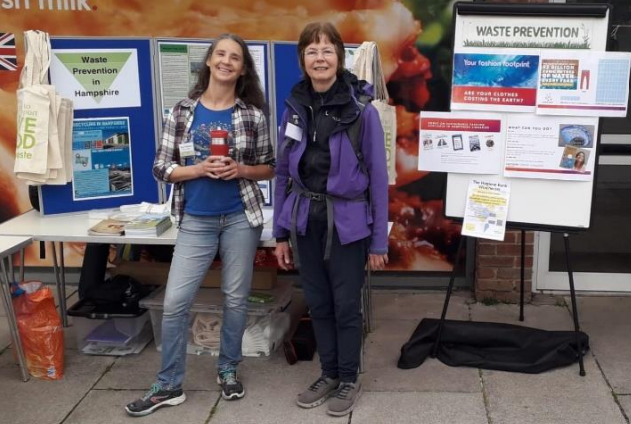
Many groups have run activities and organised information stalls at local events, such as the Alresford Show, Littleton & Harestock Show, South Wonston Fetes, Bishops Waltham Carnival etc.
5.7 Eco Fairs
Several groups have held their own eco fairs, hosting stalls from other organisations and promoting their own activities:
- Alresford Eco Fair – 4 Nov 2023
- Harestock Eco Fair – 30 Sep 2023
- Twyford Green Fair – 17 July 2021, 16 July 2022
- Bishops Waltham Eco Fair – 8 Oct 2022, 23 March 2024
5.8 Climate Fresk
A taster session was organised for parish councils, jointly with WCC, in 2023 to showcase Climate Literacy Training and Climate Fresk – both used for initial engagement and learning around climate crisis issues. The aim was to engage parish councillors in areas with existing WeCAN groups, as some groups had reported that their local parish council devolved all climate activity to the group, remaining less engaged on the issue themselves.
Climate Fresk is a two and a half hour facilitated workshop providing climate education that is accessible, engaging and scientifically-based. Three parish councils (Micheldever, Twyford and Colden Common) subsequently booked Climate Fresk sessions, paid for with WeCAN project funding.
6. Research
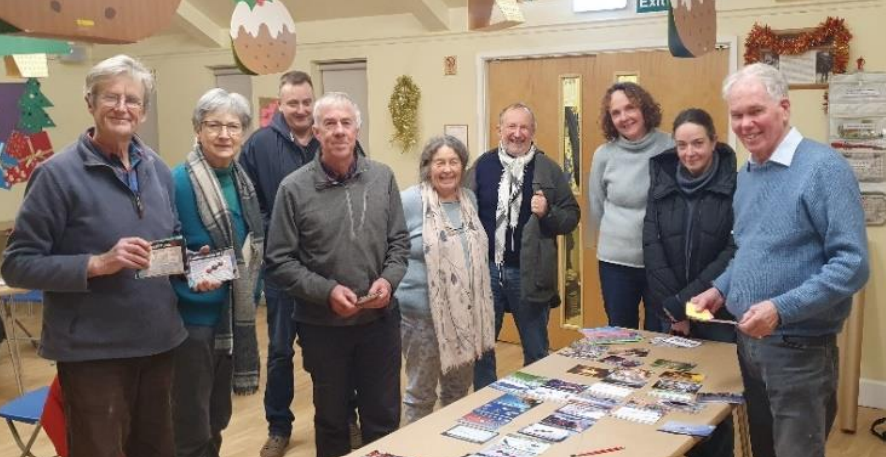
Over the last year, WinACC staff and volunteers carried out a research project to capture the voices of participants explaining their lived experience of WeCAN. They interviewed members of nine different WeCAN groups and concluded that the WeCAN project appeared to be gathering momentum as relationships are strengthened and experience grows. They found that the WeCAN model is being effective in achieving the objectives intended and is therefore worth replicating in other areas. Participants’ responses showed that a network like WeCAN has significant value in mutual encouragement and empowerment.
The full research report “Communities taking climate action locally and together” can be downloaded at https://www.winacc.org.uk/communities-taking-climate-action-researchsummary-2024/.
7. Next Steps
Based on the evidence that the WeCAN project is proving to be a successful approach to community engagement on climate work, WinACC has secured further funding from SDNPA and WCC for the year 2024 – 2025. WinACC is collaborating with these and other partners on further developing the learning community approach to effective climate action with further scale and reach.
8. Appendix
8.1 List of WeCAN Groups
| Group name | Date established | Website/Social media |
| New Leaf Alresford | Pre-WeCAN | https://newleafalresford.org/ |
| Sustainable Bishops Waltham | July 2023 | https://www.facebook.com/SustainableBW |
| Colden Common Climate Action | Sep 2023 | https://www.facebook.com/groups/1096646935027463 |
| Sustainable Droxford | Mar 2023 | |
| Hambledon Greening | Pre-WeCAN | https://www.hambledongreening.com/ |
| Highcliffe Climate Action | Oct 2023 | https://highcliffeforum.wordpress.com/climate-action-in-highcliffe/ |
| Itchen Valley Parish Council Environment Group | Pre-WeCAN | |
| Littleton & Harestock Parish Action on the Climate Emergency (PACE) | Nov 2022 | https://lhpc.org.uk/environment-pace/ |
| Sustainable Oliver’s Battery | Pre-WeCAN | https://www.oliversbattery.info/sustainable-olivers-battery/ |
| Otterbourne and Allbrook Climate Solutions (OACS) | Apr 2024 | https://www.otterbourne-pc.gov.uk/otterbourne-allbrook-climate-solutions-oacs.html |
| Green Owslebury (GrOws) | Apr 2023 | https://owslebury.org/grows/ |
| Climate Action for Newtown and Soberton (CANS) | Nov 2023 | https://www.facebook.com/ClimateActionNewtownSoberton/ |
| South Wonston Sustainability | May 2022 | https://swsustainability.co.uk/ |
| Action on Carbon in Twyford (ACT) | Pre-WeCAN | https://www.facebook.com/aoctwyford/ |
| Upham Action on the Climate Crisis (UpACC) | Mar 2023 | https://uphamvillage.org.uk/upacc/ |
| Sustainable Waltham Chase & Swanmore (SWaCS) | Nov 2022 | https://swacs.co.uk/ |
| Winchester Repair Cafe | Pre-WeCAN | https://www.repaircafewinchester.org/ |
Winchester Action on the Climate Crisis
Main Campus, University of Winchester, Sparkford Road, Winchester SO22 4NR.
Registered charity number 1150754.
A company limited by guarantee registered in England and Wales with company registration
number 08013043.