
A brief history
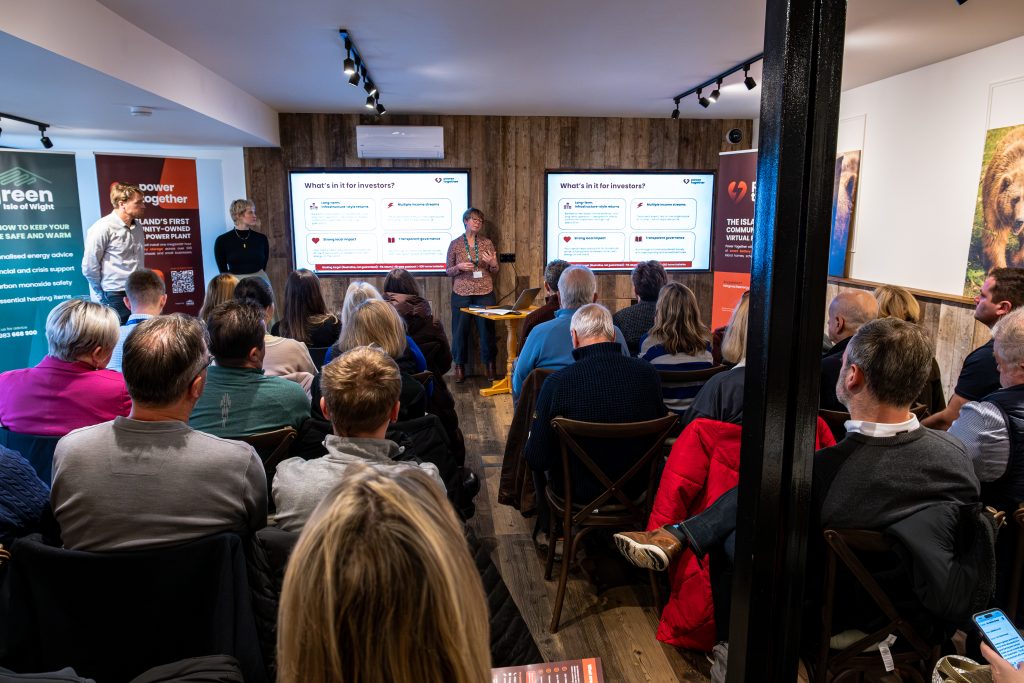
Lisa Beaney, Managing Director, founded Green Isle of Wight three years ago, as she felt an alternative and more ambitious approach to energy saving advice on the Isle of Wight was necessary. Lisa set up Green IoW as a Community Interest Company which then went on to deliver 14 months of home energy advice in Southampton and the Isle of Wight, initially through the DESNZ Local Energy Advice Demonstrator programme.
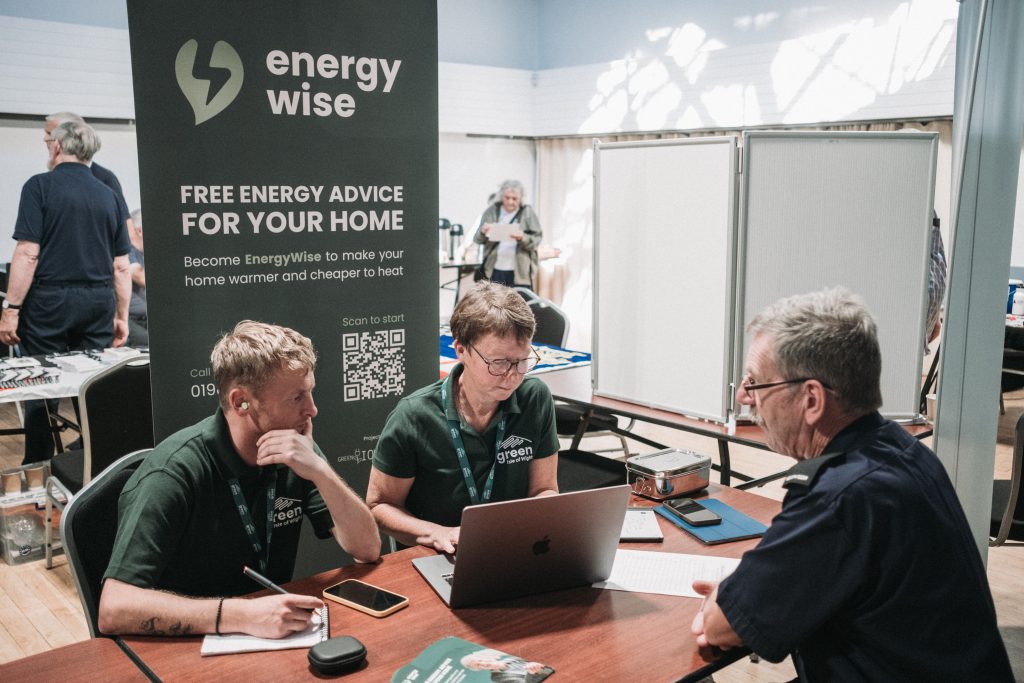
Green IoW now employs 6 staff – several work as Energy Advisers, providing home energy advice on home visits and at outreach sessions all over the island. Other projects include providing fee-based independent heat loss calculations for heat pump installations, both for householders and installers.
Through their SGN funded Safe & Warm project, Green IoW provides free advice that includes helping people compare and understand quotes they’ve had for heat pumps, solar and batteries.
Isle of Wight
The Isle of Wight is a unique community with many challenges – including 30% of the population over 65, below average household incomes and homes with below average energy efficiency performance. Many households are rural, with 40% of homes not on the gas grid.
The capacity of the electricity grid on the island is constrained, with all electricity being supplied via two 132kV subsea cables from the mainland.
Power Together
Green IoW was keen to develop longer term solutions to fuel poverty, which led them to look at a distributed battery storage project. This avoided the issues around larger scale battery storage, such as obtaining land, planning permission and a grid connection.
Their Power Together project aims to share 1 MWh of storage across over 200 households. Financial modelling showed annual savings of £50 – £300, which would be shared between the householder and Green IoW.
The project is being developed in partnership with the Centre for Energy Equality (CfEE), home energy system specialists who are experienced in creating software. Green IoW previously worked with CfEE on the LEAD project, which used CfEE’s Fairer Warmth platform. This included setting up Vectis Community Energy, a new Community Benefit Society which will run Power Together.
Funding
The Power Together project started with a successful application to the South West Net Zero Hub (SWNZH) for a Stage 1 Community Energy Fund (CEF) grant, to pay for a feasibility study. The study indicated that the project could be financially viable, so an application was then made to the Energy Redress Scheme Innovation Fund for £440,000 to cover the cost of developing the software into a working system. Additional Stage 1 CEF funding was also obtained.
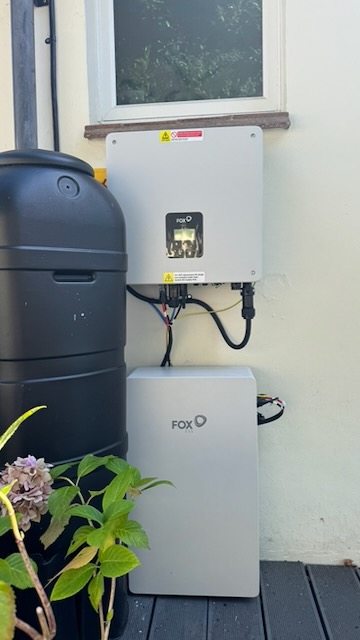
Vectis have now installed two batteries to get real-life data in order to test their financial modelling and Social Virtual Power Plant software and allow them to proceed to a community share issue to fund the project. A third is due to be installed any day.
Electricity grid
Power Together also aims to help balance grid demand through load shifting – taking advantage of peak and off-peak electricity pricing. Vectis is working with a utility company to provide a tailored time-of-use tariff for their battery users. They aim to also take advantage of grid flexibility, where energy suppliers will pay them to charge the batteries at times of high solar and wind generation. And conversely, when demand is high, suppliers will pay higher rates for export from the batteries.
Green IoW have been working with the Distribution Network Operator, SSEN, to understand the limitations of the electricity network on the Isle of Wight. They have agreed that each household battery will be G98 compliant (below 3.68kW export). This simplifies each connection to an ‘install and notify’ process that avoids the need to obtain advance approval from SSEN.
Involvement
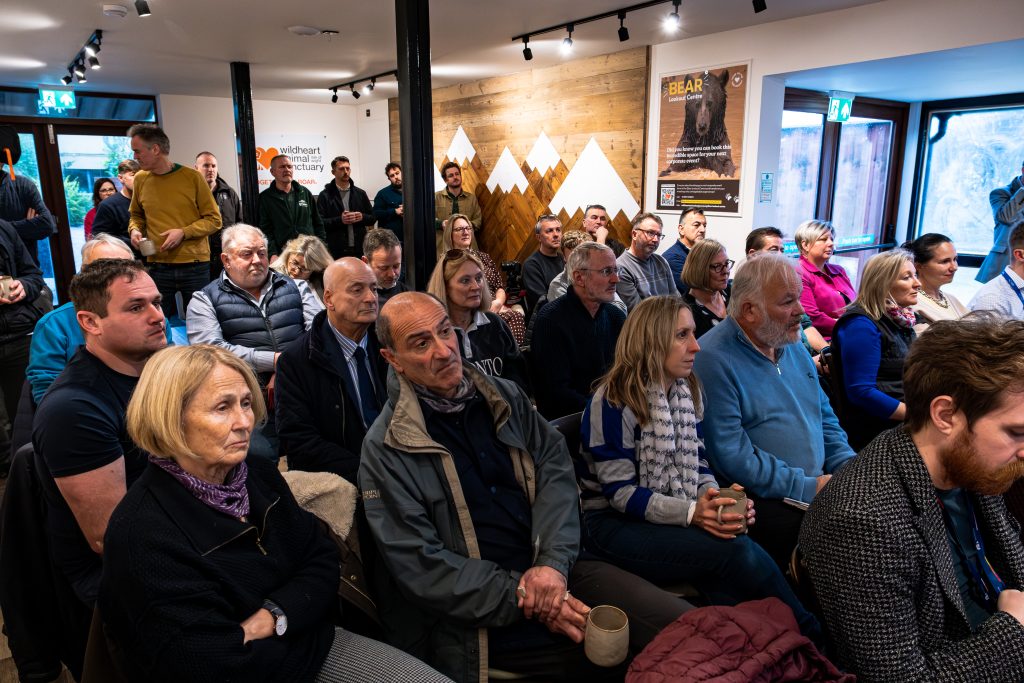
Green IoW ran an initial stakeholder engagement event for Power Together and have also been talking about the project at their regular energy advice outreach sessions. As a result, 300 households have now registered to express their interest in applying to have a battery.
They are also talking to households that already have batteries, which are also able to take part in the project. Green IoW have found that many only use their battery for solar and haven’t thought about using them with time-of-use tariffs or grid flexibility, which means the battery often gets very little use in winter.
The project is also looking to include larger batteries in community buildings. A large part of the cost of having a storage battery is the work needed for the actual installation. This part doesn’t usually increase much for larger batteries, making them proportionally cheaper to install. Larger buildings often have 3 phase installations with significant capacity, which expands the options for generation and storage.
Challenges
Practical implementation of Community Energy on the Island is as challenging as anywhere else in the UK, and perhaps more so due to local demographics, fuel poverty, grid constraints and planning permission.
Working within the various regulation frameworks has been challenging, such as not breaching Ofgem rules, Green IoW hope that the impending modifications to energy trading rules will make it easier to set up local electricity supply arrangements.
As a small organisation, Green IoW has been able to adapt and change very quickly, when necessary. But they have found that larger organisations they work with don’t usually have that flexibility – which can be frustrating.
Finding the right people to talk to at SSEN was difficult, but they got there eventually. SSEN staff dealing with community energy have a wide remit to address of which the Island is a small and remote part, and are often more used to working with solar farm projects, not battery projects.
Developing a community share issue involved a huge learning curve. But Green IoW had invaluable advice and support with this from the SWNZH, Community Energy England and Community Energy Go.
Setting up a Community Benefit Society was very different from a Community Interest Company, with different rules, especially around creating the organisation’s purpose.
Domestic grid flexibility is at an early stage of development and happens outside of normal tariffs. Green IoW found that the financial structures are not yet in place. They talked to a lot of intermediary organisations and found it difficult to tie them down to actual figures.
Other Projects
Green IoW is looking at energy generation projects using solar panels on community buildings.
They are also planning a series of community workshops which will discuss batteries, how much energy is needed on the Island, where people would like renewable energy infrastructure to be placed, and how much they’re happy with. The Isle of Wight is very windy, but there are currently no utility-scale wind turbines – despite Vestas having a large wind turbine manufacturing plant at Newport.
Green IoW is also looking at small scale hydro generation projects. There are many old water mills in the Island, with the potential to use fast-flowing millstreams.
Many households could be on a tariff that would lower their energy bills. Green IoW is planning a campaign around tariff switching and will provide support to help people do that.
Green IoW is developing an energy programme for schools that includes a Key Skills 2 lesson plan on renewable energy and a game that helps children look for how their homes can save energy.
Ultimately, the Island has tremendous renewable energy potential from solar, tidal and wind. Community Energy with sufficient scale and ambition can harness these local resources to improve the quality of Island life, particularly for those most in need.
Case study written August 2026
Green Isle of Wight is part of the Hampshire & Solent Community Energy Network. Read more about the network here.