
There is a growing concern about the need for stronger action on climate change across the world.
The publication in October last year of the Intergovernmental Panel on Climate Change Special Report on the impacts of global warming above 1.5°C, stressed the urgency highlighting a diminishing window of opportunity which could be closing as soon as 2030. However, along with growing concern, there is also a growing frustration at the slow pace of governmental action compared with the increasing pace of the impacts already being felt from global warming.
The emergence of Extinction Rebellion as a movement to challenge governments through the tools of civil disobedience, is one example of this growing dissatisfaction. Whether or not you agree with their methods, it’s clear that governments, businesses and people around the world need to be more ambitious if we are to reach a future where we no longer contribute to climate change.
None are more heavily invested in that future than the younger generations and they too are making their voices heard. Some are using the law, such as the ongoing case of Juliana v the United States, an action brought by 21 young people, asserting that the government has violated their rights by allowing activities which contribute to climate change and requesting that the government take steps to reduce carbon dioxide emissions.
Others are using more a more traditional form of protest, following the example of Greta Thunberg in Sweden who has been striking from school every Friday since August 2018 to protest outside the Swedish Parliament against the lack of action on the climate crisis.
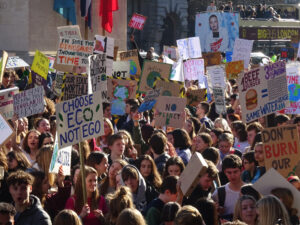
School Strike for Climate is a now growing international movement, involving pupils and students around the world taking part in demonstrations to demand stronger action on climate change. Young people are not feeling listened to, that they don’t have a voice, and that not enough action is being taken on climate change. Here in the UK Youth Strike 4 Climate are calling on the UK government to include young people in decision making related to global warming, to have a say in their future. Organised by the UK Student Climate Network and the UK Youth Climate Coalition, Youth Strike 4 Climate saw thousands of students across the UK (including in Winchester) strike on 15 February and a further day of action is planned for 15 March.
It is clear that young people are not feeling listened to, that they don’t have a voice but also that there is a danger that the future is seen fearfully rather than an opportunity for positive solutions. WinACC’s recent Young Poets Competition held jointly with Winchester Poetry Festival, highlighted many of those fears but also the need for greater awareness of climate change issues within the education system. WinACC is well-placed to assist here.
We recognise the need for stronger action on climate change and it’s great that younger generations are standing up for a better future but we also need to ensure that children and young people feel involved in the decisions that are going to affect them. In Wales, the Wellbeing of Future Generations Act 2015 established a Commissioner to ensure that policy making takes into account the long term impacts to improve social, environmental and economic wellbeing. This includes action on climate change and is the type of approach that could be developed further.
It surely cannot be right that we allow our children to believe that the only way they can have a voice in their future is by risking their own education. They deserve more.
Tom Brenan
Executive Director, WinACC