
Blog series ’15 minute checks’.
We may all be finding ourselves spending more time than usual in our homes, and you might find yourself doing those projects around the house that you don’t ordinarily have time for.
In Winchester, our homes are a major source of the carbon emissions that contribute to the climate crisis as shown by our annual greenhouse gas emissions report. We’d like to share a series of quick ’15 minute checks’ that we can all take at home to help make our homes as energy efficient as possible, and therefore having the least impact on climate change.
These ’15 minute checks’ can be carried out by anyone living in a property, whether you are a renter, landlord or homeowner. These should also save you money, alongside making your home more energy efficient. If you have any comments or questions regarding any of these blogs please email us at contactus@winacc.org.uk and we’ll do our best to answer them.
Heating (part 1)
These tips are for anyone who has a central heating boiler whether it uses mains gas, oil or LPG.
Although many of us will soon be turning off our central heating system as spring arrives it may be worthwhile to review the settings on your heating system so it is ready for the autumn and not wasting energy over the summer months.
Any central heating system should have at least:
- a boiler thermostat
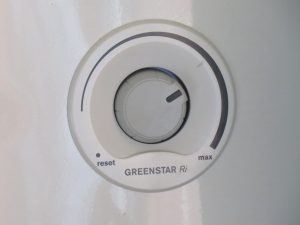
Boiler thermostat found in homes - a room thermostat that monitors the temperature inside the home (and is connected to the boiler)
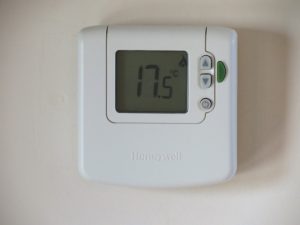
Room thermostat found in homes - a programmer or timer
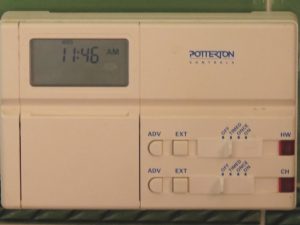
Programmer for heating system in homes - thermostatic radiator valves (TRVs) on the radiators
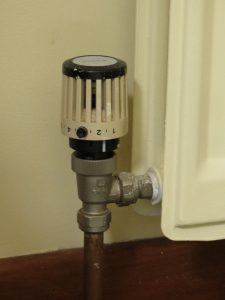
Thermostatic radiator valves
Let’s look at these in turn.
The programmer, which determines whether the central heating boiler is On or Off, should have separate timers for the heating and hot water operations (if it doesn’t, and you don’t have a combi boiler, it may be relatively simple to exchange the single-channel timer for a dual-channel timer that separately controls heating and hot water). For example, the heating timer might be set to switch the boiler On 30 minutes before you get up in the morning and Off 30 minutes or more before you go to bed.
If your home is empty during the day the you can adjust the timer to go Off before the last person leaves the home and On before the first person returns. If someone is at home all day, but your house is well insulated you may find that you don’t need the boiler on much during the day anyway. The exact On and Off times will depend on the season and how quickly your home heats up and cools down. This is where you can do some experiments to work out which is best for you.
We recommend not leaving the boiler permanently on, as the temperature can comfortably drop when you are sleeping at night as well as when you are out during the daytime.
Bob Whitmarsh
More information at https://lowcarbonhousehold.weebly.com/
All profits from sales of Bob’s book goes to WinACC.
Watch out for the next in the series of our ’15 minute checks’; heating part 2, coming soon.
These blogs are written in good faith and the author/WinACC cannot be responsible for the consequences of following the advice offered. If in doubt get professional advice