
Blog series ’15 minute checks’.
We may all be finding ourselves spending more time than usual in our homes, and you might find yourself doing those projects around the house that you don’t ordinarily have time for.
In Winchester, our homes are a major source of the carbon emissions that contribute to the climate crisis as shown by our annual greenhouse gas emissions report. We’d like to share a series of quick ’15 minute checks’ that we can all take at home to help make our homes as energy efficient as possible, and therefore having the least impact on climate change.
These ’15 minute checks’ can be carried out by anyone living in a property, whether you are a renter, landlord or homeowner. These should also save you money, alongside making your home more energy efficient. If you have any comments or questions regarding any of these blogs please email us at contactus@winacc.org.uk and we’ll do our best to answer them.
This blog is the second one on heating controls. Please read part 1 first if you haven’t done so already.
Part 1 talked about the importance of the programmer. The next most important control is the room thermostat.
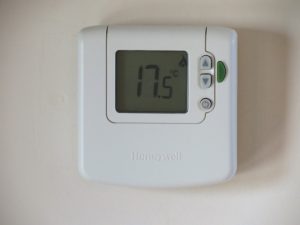
Most homes will have this fixed to the wall in the hallway. This room thermostat will switch the boiler On or Off according to the thermostat’s setting. This will only work if the boiler is in a ‘on’ state.
Turning the room thermostat down by one degree or more will save money (and energy) and this can be a very effective way to cut down on your energy use. A temperature range of 18 to 21°C is usually recommended for living areas.
As you gradually turn down the room thermostat, you might feel a little colder than you are used to, so you may want to start to wear warmer clothes. It is certainly cheaper to wear a sleeveless body warmer, and even some thermal underwear, than to pay for higher energy bills!
Next up is the boiler thermostat.
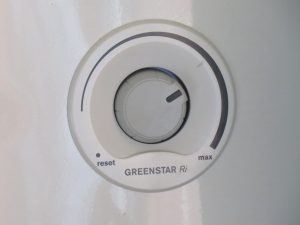
The boiler thermostat sets the temperature at which hot water leaves the boiler before it is pumped around the home. There is usually a simple rotary knob on the boiler. If you find your radiators get too hot to the touch then turn down this knob but normally it should be in a middle position. The hotter the setting of the boiler thermostat the quicker your home will warm up.
Thermostatic radiator valves (TRVs) found on individual radiators can be used to set different radiators (and rooms) to different temperatures.
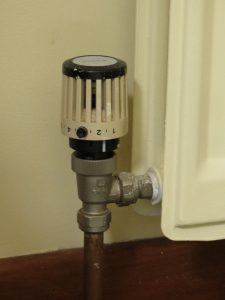
For example, a room that is rarely used can have a low temperature setting, bedrooms could be slightly warmer and living areas could be warmer still. The TRV will turn the radiator off as the air around it reaches the set temperature point and On again as the air cools below the set point.
TRVs have uncalibrated numbers on them, this means you’ll need to experiment with them to find the best setting for each room. It is worth remembering that a TRV should never be fitted to a radiator in the same space as the room thermostat otherwise the boiler will hunt On and Off.
We hope this blog has helped you see how important it is to make an effort to understand all your heating controls.
A few minutes spent refreshing your memory and perhaps experimenting with different settings is well worthwhile if you want to reduce your carbon footprint.
It has been said that “Central heating system controls seem to live incognito in many homes. Many people may not recognise or understand their central heating control system.”
Now’s the time to put that right in your home.
Bob Whitmarsh
More information at https://lowcarbonhousehold.weebly.com/
All profits from sales of Bob’s book goes to WinACC.
These blogs are written in good faith and the author/WinACC cannot be responsible for the consequences of following the advice offered. If in doubt get professional advice