
Build Back With Better Concrete, Guest Blog by David Jones, WinACC Trustee
I have been excitedly devouring the positive narrative of a post-Covid world of happy, low-carbon communities. Apparently, so the news wires tell us, we have learned our lessons and are collectively prepared to change our ways: we are going to “Build Back Better”. But, who is this “we”? I am looking hard for the tangible evidence from governments, institutions, businesses… us. Me. I really want to be optimistic, and glory in the tender green shoots such as Barclays’ commitment to net zero carbon (in 30-years’ time). But I am a realist and expect that, sadly, in our head-long pursuit of self-interest and rampant consumerism we will, like last time, simply build back with better concrete.
Oh, I’m alright Jack. I’m saving more than £500 every month on my “running costs” including commuting. And I’m feeling more privileged than ever, bubble-wrapped (so far) from the worst this crisis can throw at society. I am assuaging my guilt by giving much more to charity while lending my shoulder to the wheel of climate justice. Meanwhile, my eco-anxiety runs deep because the solutions are far-reaching.
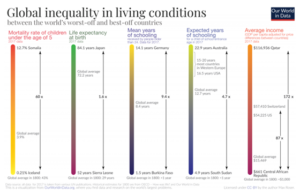
Inequality – in all its forms – drives the climate crisis. Black Lives Matter is top of the news agenda, and long overdue at that. But gender and inter-generational inequality could and should also be front of all our minds during the current crisis, along with other social and regional inequalities. If we are really serious about building back better we need policies to drive fairness across all society. But the Big One – the one that is truly powering us towards climate and ecological breakdown – is wealth inequality. Us humans are seemingly hard-wired to covet our neighbour’s possessions and we can even see this in ostentatious displays of Tesla green-ness. Always wanting more, more, more, we have been ignoring the ever-increasing injustice in the distribution of resources – this is most obvious at a global scale (see chart). And inequalities are getting worse, not better, during the current crisis.
It is the wicked problem of our generation – how to give stuff up. How to avoid carbon-intensive activities and products, and accept we don’t need what we want. I wrestle with it, governments wrestle with it (because they measure it by the laughably inappropriate GDP, a calculation that ignores nature, well-being, culture, community cohesiveness…).
The only certainty in this complex web is that we will all have to change our ways in the end, it’s just whether we get organised to achieve that change calmly and safely through a “just transition”. That will require personal sacrifices, and for that we must look deep inside ourselves.
As a trustee of WinACC, I hope that WinACC and its partners in the public, private and civic sectors will steer our corner of England towards a just and green transition – Winchester District has many attributes that gives it a good platform for that change, but to take advantage we must work together with energy and creativity.