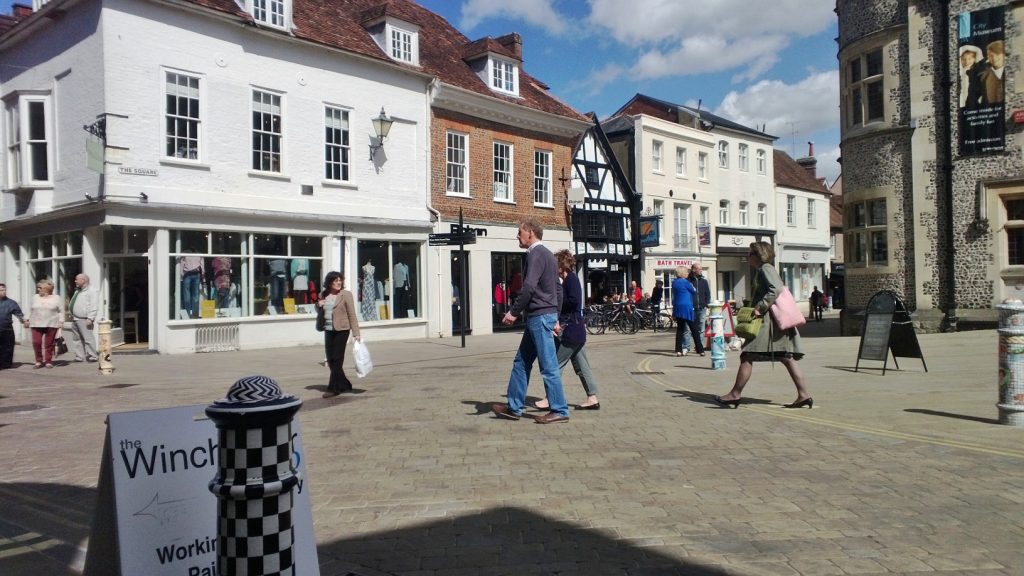
We have a vision of Winchester where the streets are for people, and where we all enjoy walking, cycling and getting about. We see a city with freedom of movement that encourages people to go anywhere they want without having to rely on the private car. A city with reliable and affordable public transport. A city without unnecessary traffic inside the city walls. A city where moving around uses less energy and produces less pollution and greenhouse gas.
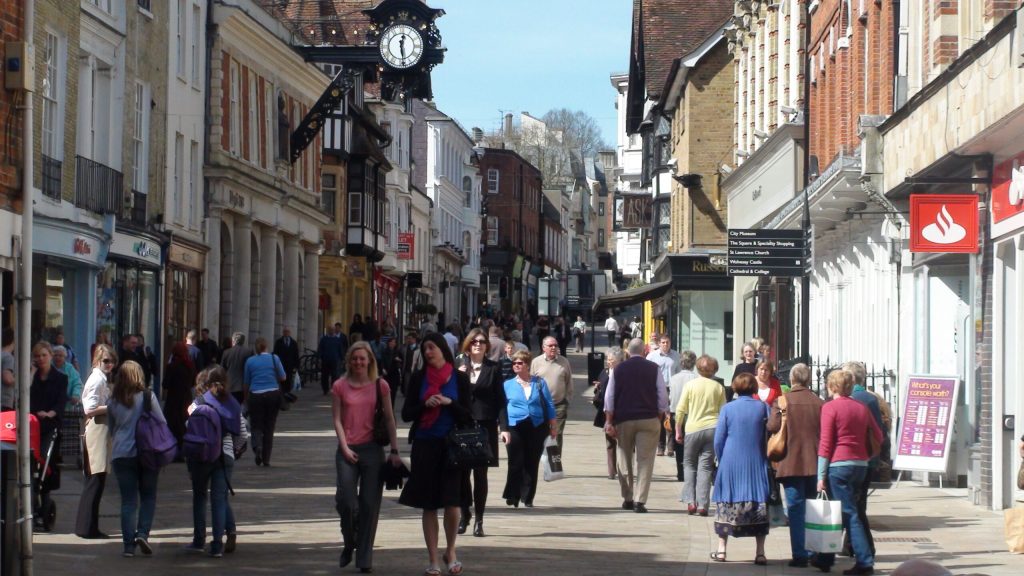
Our vision
- A remodelled city centre with many car-free streets and low-traffic neighbourhoods, a minimum of delivery vehicles, and better access for people on foot, on cycles and on public transport. See WinACC’s photo-essay “New Life Old Spaces” for ideas for improvement.
- Walking and cycling networks across Winchester that are easy to follow and get us to wherever we want with a minimum of conflict with motorised vehicles.
- Fewer parking spaces inside the former city walls, while keeping enough places for disabled drivers and residents.
- 20mph limit areas throughout the city centre and in parts of the suburbs to protect pedestrians and cyclists and reduce acceleration and deceleration.
- Smart Travel – workplace, shop, leisure facility and school travel plans that mean people use less fossil fuel energy to travel, and become healthier by walking and cycling more.

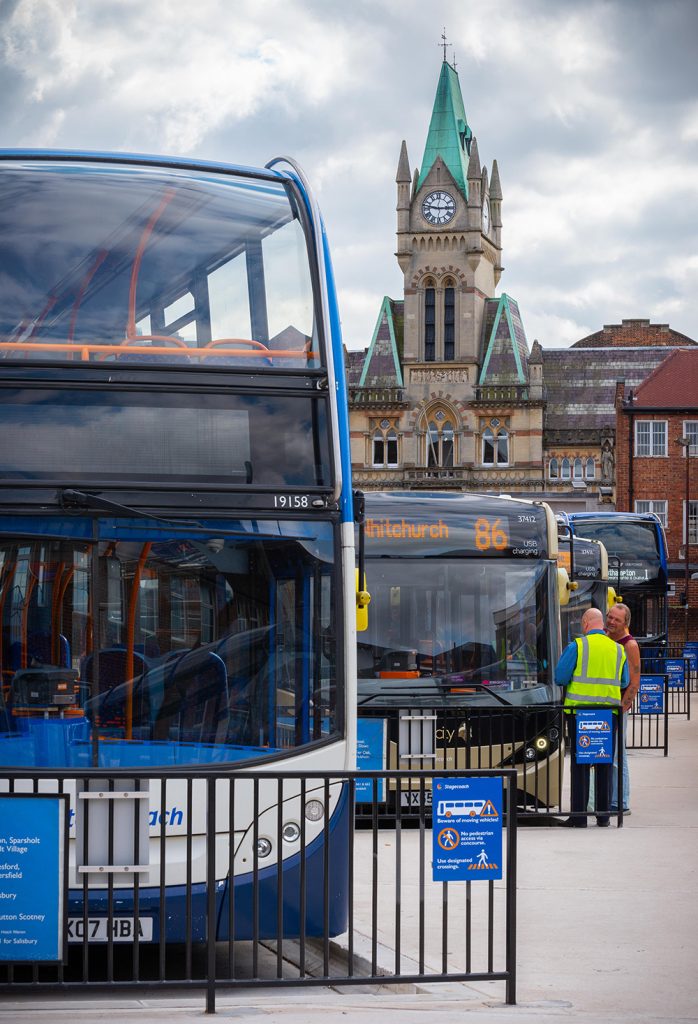
6. Safe routes to schools with priority for walking and cycling.
7. More and better bus and train services.
8. Better connections between buses and trains and between city and district buses.
9. Well-used car clubs, car-pooling and car sharing schemes.
10. Fewer workplace off-street parking spaces in the centre.
11. Greener arrangements for goods deliveries that are more energy efficient and produce lower carbon emissions.
12. All new housing and office developments built at well-designed high density to reduce the land needed and distances from the public transport.
How we can achieve this vision
Numbers refer to numbers in ‘Our Vision’
- Focus the Winchester Movement Strategy initially on traffic reduction. Ensure that the supplementary planning documents for the Central Winchester Regeneration Area apply to the whole city centre. Incorporate them into the local plan to have more force in planning law.
- Publicise existing routes that avoid busy roads. Improve signage on them. Use the space freed up by reduced traffic, brought about by the implementation of the Winchester Movement Strategy, for new routes, wider pavements, and cycle lanes.
- Remove city centre parking for everybody except people with reduced mobility and residents. Limit residents’ permits to one per dwelling. Prevent additional off-peak parking by progressively replacing single yellow lines with double yellow lines.
- Extend 20mph speed limit to residential and suburban shopping areas and near all schools, and make it self-enforcing with suitable road layout and design.
- Develop more effective travel plan techniques, develop travel plan monitoring resources for businesses, and spread their use through planning requirements for new developments.
- Establish car exclusion areas and double yellow lines around schools wherever possible.
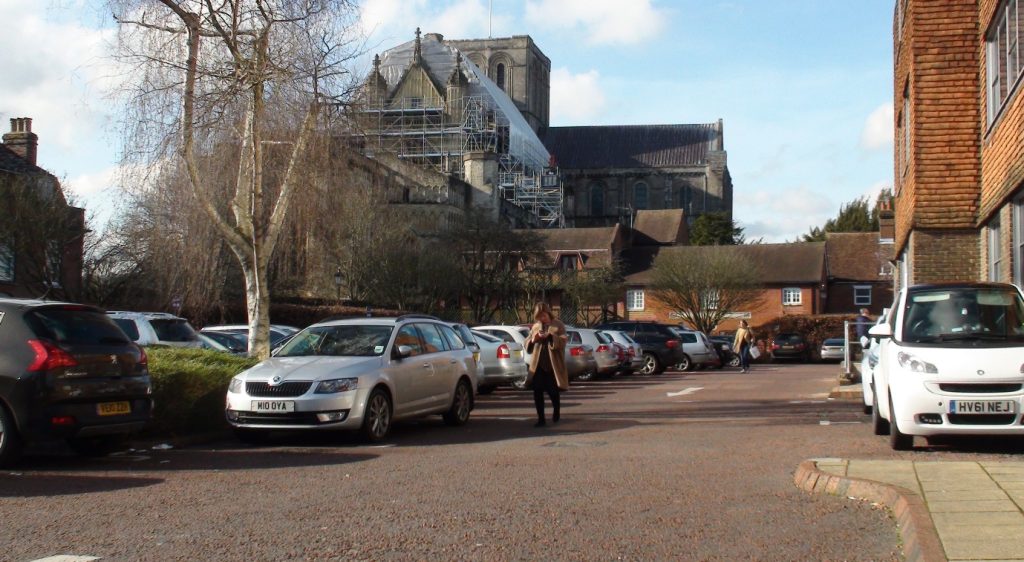
7. Develop more frequent local trains, with convenient connections where necessary, to all parts of Hampshire, especially in the Solent area. Build new railway stations near large developments using the government’s new stations fund. Develop high quality bus facilities and services through an Advanced Quality Partnership Scheme (under the powers given to HCC under the Bus Services Act 2017) for all bus routes serving the district, and integrate the Park-and-Ride bus service fully into the city bus network.
8. Establish better connectivity between city / district bus services, and between buses and trains, ensuring more district bus services pass close to the railway station.
9. Reduce radically the number of spaces in all city centre car parks. Convert the remaining spaces into the primary location for residents’ city centre parking, car club docking points, and residents’ car charging points, in order to free up central street space for better cycling and walking infrastructure.
10. Reduce work-related parking spaces, through planning powers and business rate management. Station Approach, where few people need to commute by car, should remove all parking spaces, to provide a precedent for good practice throughout the centre.
11. Offer a low-emission freight transfer and delivery scheme using rail-connected transfer points and low energy/emissions delivery vehicles such as e-cargo bikes.
12. Design all new housing and office developments for primary access by public transport, cycling or walking. Car access and storage should be a secondary hidden facility out of the public eye; this could be a planning requirement introduced in the local plan review.