
What you can do today as an individual
This link provides an overview of the Glebe Solar & Energy Storage Project – Ethical Power.
This proposed solar farm has now progressed to the point where the developers have submitted a planning application to Winchester City Council (WCC). WinACC are encouraging people resident in Winchester and the surrounding area to note our evaluation of the application in the sections below and consider logging-on to the planning portal to provide comments of their own, hopefully in support of this planning application.
How to comment or renew your support
- Search for Reference 25/01050/FUL on the City Council’s planning portal. Register first if you haven’t done so before.
- Click the ‘Comments’ tab on the screen, fill in your details and click ‘support’ where it asks for a stance.
- Post your comment in the text box as directed – you are welcome to copy and paste some of the information from this webpage if it makes it easier.
You are free to leave any comments you wish. If you’re unsure what to say you could mention:
- the declaration of a climate emergency by Winchester City Council and the need to transition away from fossil energy to avoid climate breakdown and damaging weather events.
- the need for more locally generated electricity from renewable sources to power our growing need for electricity for home heating and transport.
- the need to safeguard UK energy from supply disruption and price instability though from imported fossil gas from overseas.
- the large biodiversity net gain possible on land on which a solar farm is installed
- the greatest threat to our landscape being the effects of the rapid and accelerating climate changes on indigenous wildlife, wild plants and crops which are adversely impacted by hotter summers, drought, flooding and storm damage.
We know that many people across the Winchester area support solar farms. They think solar farms are an important part of the mix of renewable energy we need to help prevent further pollution to our environment by the use of fossil fuels. Most people support rooftop solar panels though many recognise that the scale, speed and economics of rooftop alone will not be sufficient to move fast enough to achieve the step change required, which is now embodied in policy and law to slow and begin to reverse damaging climate change.
This is your chance to ensure your voice is heard.
The deadline for comments is Wednesday 2 July 2025.
Further information about this planning application
About the solar farm
How much energy it will provide:
10MW solar Photovoltaic (PV) arrays and co-located energy storage scheme, will provide enough electricity to potentially power 5,320 homes in the Winchester District.
Land area of panels: 21 hectares..
Grid connection: A grid connection offer has been secured from the District Network Operator (DNO), Scottish and Southern Electricity Network (SSEN). An underground cable would be laid to physically connect the solar array to the grid. The defined cable route and associated details are yet to be determined.
Duration: The application proposes a consent for a solar farm for a 40 year period, after which it would be removed and the land returned to its current use. Whilst this is a standard plan period, any owner of a solar farm or wind turbine/wind farm is able to apply for planning consent beyond 40 years, as that period comes to an end.
WinACC response to the plans for Glebe solar farm and energy storage project
WinACC Response to Planning Application 25/01050/FUL
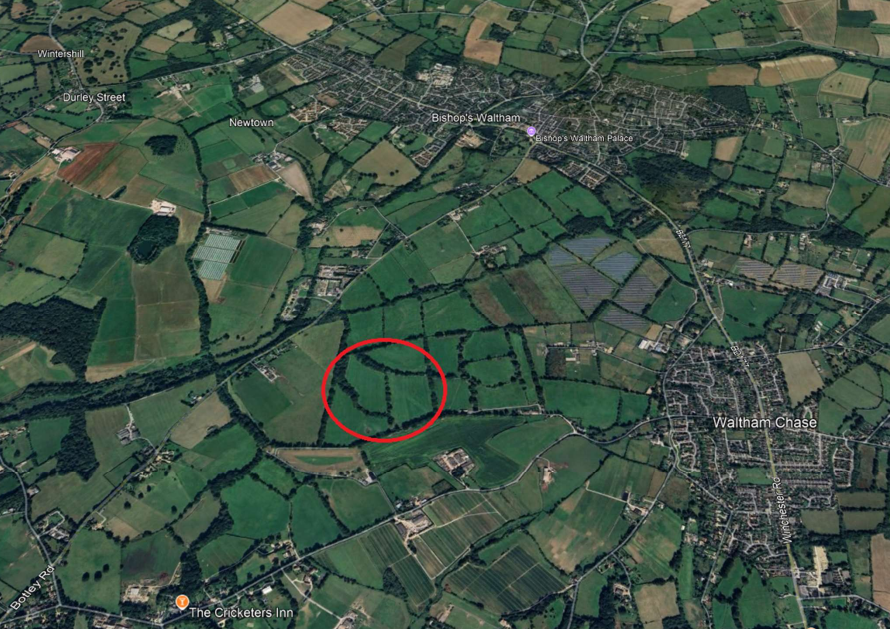
The installation of a ground mounted solar photovoltaic array and battery energy storage, together with associated infrastructure, access, fencing, CCTV, on-site biodiversity net gain and associated works: Glebe Farm Curdridge Lane Waltham Chase Southampton Hampshire SO32 2LQ.
WinACC supports this planning application.
Our views are offered following several conversations with the applicants, observations of their information and public exhibition and the Planning application documents submitted by them. We have also visited the site to provide our own assessment of the location and likely visual impact from public rights of way. We have also sough clarification from the applicants on matters of concern raised by consultees, to test the applicants on the details of their proposals against observations of concern made, so that we can be confident that our support for this application is soundly based.
Community involvement
We were impressed that the developer sought our opinion many months prior to submitting a pre-screening application to WCC. We emphasised the importance of wider community engagement to the applicants, having been closely involved in the application for the nearby Locks Farm site two years prior. It was clear that the applicant fully intended wider community involvement and shortly after our first meeting, they held a local open public consultation event. This event, together with the many other illustrations of community involvement seen in the ‘Statement of Community Involvement’ on the planning portal is testament to the extent to which this applicant had either heeded our advice or been true to their original intent to seek a genuine listening conversation with local community organisations and residents.
Landscape and visual impact
We note that the WCC Landscape Team and the officer responding on behalf of the team state “There would be no objection to this proposal on landscape grounds however this would be on the condition that its implementation should strictly accord with the submitted Landscape Plan”.
Having visited the site, we concur with the conclusions of the Landscape and Visual Impact Assessment (undertaken May 2025) and the comments on that by the WCC landscape officer that that this is a visually contained landscape and that views towards the site are limited, due chiefly to the local topography and the existing vegetation which limits views, particularly those from the adjacent settlements but also from the nearby public right of way. We agree that visual intrusion is minimal and that this landscape character type is capable of containing several solar developments without a significant impact on the fabric and general qualities of the countryside, as evidenced by the current solar deployments in this area between Bishops Waltham and Waltham Chase which are barely discernible from the main Botley Road or the B2177.
Tree Officers Observations
We have noted that the WCC Tree Officer has raised some concerns of apparent omission by the applicant on the matter of the likely impact of shading of the solar panels from nearby trees and hedgerows, and the associated consequences of the ongoing maintenance that the solar panels would require given the seasonal debris fall produced by broadleaved trees. We have spoken with the applicant who has assured us that there will not be pressure on the trees and hedgerow because of the development. They have confirmed that the location of the trees and hedgerows and associated shading impacts have been considered in their modelling of the electrical outputs, which in turn has informed the design and layout of the proposal. The applicant confirmed that although some solar panels would experience shade at various times of the day and year, this has been factored into the modelling and that they are committed to protecting the trees and hedgerows as outlined in the planning application. They have assured us that they will supply the necessary assurances to the Tree Officer and Planning Officer accordingly.
Agriculture
Land for use in locating solar panels should ideally not be ‘best and most versatile’ land, i.e. predominantly not Grade 1, 2 and 3a in the scale of Agricultural Land Classification. The site chosen by the applicant is 95% Grade 3b or Grade 4 and mostly Grade 4. This means the land has some encumbrances or significant restrictions to its use for agriculture, mostly because of being very wet for large parts of the year. We have visited the proposed location and can confirm, through the mix of grasses and other plant species, that much of the land lies wet during the year, making it unsuitable for cattle grazing at various times and even problematic for sheep because of heavier parasite burdens (e.g., liver fluke Fasciola hepatica) during wetter episodes. Consequently, other than occasional crops of hay, which we understand are problematic in this location, there is no reason for seeking to preserve agricultural productivity that should apply to considering this site for locating solar panels.
Biodiversity
The applicant has indicated a Biodiversity Net Gain of circa 62% in habitats, which considerably exceeds that which they are required to meet in this situation. Details of this can be seen on p2 of the letter of application and based on the Ecological Impact Assessment (EIA), both of which are on the planning portal.
Battery Energy Storage System (BESS) and safety
The applicant has included 10MW of BESS in this application, allowing electricity not otherwise supplied directly to the grid to be stored for use in peak periods of demand. The use of such technology, close to the site of the generation of renewable energy is highly desirable, given it helps balance the national grid and allows the solar panels to use more of the allocated grid connection by supplying stored electricity during night hours. The proposal is for 12 batteries in 6 pairs in a compound within the curtilage of the site and not accessible to the public.
We note that the battery technology at the time of this application is primarily based on Lithium-Ion batteries though due to the pace at which battery technology is developing, the precise battery chemistry may change. We understand the selection of equipment will be based on proven and evidential technical and safety performance. We are aware that BESS installations can raise public concern about fire safety and chemical contamination of groundwater caused by water spillage used to control a fire incident. The general safety record of large battery storage systems is very good, though the potential for overheating and fire exists and it is essential that this and any other BESS installation, addresses the requirements of the statutory regulatory bodies on this.
The applicant has supplied much information on the safe management of BESSs and can be seen in the application documents on the planning website. There is also evidence of meetings with relevant representatives of the National Fire Chiefs Council and advice being sought from the Hampshire and Isle of Wight Fire Rescue Service (HIWFRS) regarding the design of the BESS. We note that this has resulted in the design and layout of the BESS being changed to reflect the recommendations received. We also understand that a storage tank of sufficient capacity is being included so that such water used in the event of a battery fire is contained and can be removed safely and not enter the soil or groundwater.
WinACC supports this planning application and will be submitting a formal response in due course. Our response will be based around the points/notes in the section below.
Relevant documents from the planning application.
The following notes offer quick reference to matters of particular relevance and importance to anyone wishing to gain an insight into an independent view of this application. Our views in the notes below are offered following conversations with the applicants, observations of their information and public exhibition and the Planning application documents submitted by them. We have also visited the site to provide our own assessment of the location and likely visual impact from public rights of way.
The WCC planning application portal comprises many pages of reports and aspects not necessarily picked up in our overview, e.g., assessments relating to heritage, archaeology and flood risk. The Design and Access Statement on the planning portal provides a useful overall description in reader-friendly language and presentation and if you wish to focus your reading in logging-on the planning portal please .
Community involvement
We were impressed that the developer sought our opinion many months prior to submitting a pre-screening application to WCC. We emphasised the importance of wider community engagement to the applicants, having been closely involved in the application for the nearby Locks Farm site two years prior. It was clear that the applicant fully intended wider community involvement and shortly after our first meeting, they held a local open public consultation event. This event together with the many other illustrations of community involvement seen in the ‘Statement of Community Involvement’ on the planning portal is testament to the extent to which this applicant had either heeded our advice or been true to their original intent to seek a genuine listening conversation with local community organisations and residents.
Landscape and visual impact
We note that the WCC Landscape Team and the officer responding on behalf of the team state “There would be no objection to this proposal on landscape grounds however this would be on the condition that its implementation should strictly accord with the submitted Landscape Plan”.
Having visited the site, we concur with the conclusions of the Landscape and Visual Impact Assessment (undertaken May 2025) and the comments on that by the WCC landscape officer that that this is a visually contained landscape and that views towards the site are limited, due chiefly to the local topography and the existing vegetation which limits views, particularly those from the adjacent settlements but also from the nearby public right of way. We agree that visual intrusion is minimal and that this landscape character type is capable of containing several solar developments without a significant impact on the fabric and general qualities of the countryside, as evidenced by the current solar deployments in this area between Bishops Waltham and Waltham Chase which are barely discernible from the main Botley Road or the B2177.
Agriculture
Land for use in locating solar panels should ideally not be ‘best and most versatile’ land, i.e predominantly not Grade 1, 2 and 3a in the scale of Agricultural Land Classification. The site chosen by the applicant is 95% Grade 3b or Grade 4 and mostly Grade 4. This means the land has some encumbrances or significant restrictions to its use for agriculture, mostly because of being very wet for large parts of the year. We have visited the proposed location and can confirm, through the mix of grasses and other plant species, that much of the land lies wet during the year, making it unsuitable for cattle grazing at various times and even problematic for sheep because of heavier parasite burdens (e.g.,liver fluke) during wetter episodes. Consequently, other than occasional crops of hay, which we understand are problematic in this location, there is no reason for seeking to preserve agricultural productivity that should apply to considering this site for locating solar panels.
WinACC footnote: we have produced a short video on the relationship between solar farms, land classification and food security, Solar farms: A win-win for farmers, food and energy which is relevant to this.
Biodiversity
The applicant has indicated a Biodiversity Net Gain of circa 62% in habitats, which considerably exceeds that which they are required to meet in this situation. Details of this can be seen on p2 of the letter of application and based on the Ecological Impact Assessment (EIA), both of which are on the planning portal.
Battery Energy Storage System (BESS) and safety
The applicant has included 10MW of BESS in this application, allowing electricity not otherwise supplied directly to the grid to be stored for use in peak periods of demand. The use of such technology, close to the site of the generation of renewable energy is highly desirable, given it helps balance the national grid and allows the solar panels to use more of the allocated grid connection by supplying stored electricity during night hours. The proposal is for 12 batteries in 6 pairs in a compound within the curtilage of the site and not accessible to the public.
We note that the battery technology at the time of this application is primarily based on Lithium-Ion batteries though due to the pace at which battery technology is developing, the precise battery chemistry may change. We understand the selection of equipment will be based on proven and evidential technical and safety performance. We are aware that BESS installations can raise public concern about fire safety and chemical contamination of groundwater caused by water spillage used to control a fire incident. The general safety record of large battery storage systems is very good, though the potential for overheating and fire exists and it is essential that this and any other BESS installation, addresses the requirements of the statutory regulatory bodies on this.
The applicant has supplied much information on the safe management of BESSs and can be seen in the application documents on the planning website. There is also evidence of meetings with relevant representatives of the National Fire Chiefs Council and advice being sought from the Hampshire and Isle of Wight Fire Rescue Service (HIWFRS) regarding the design of the BESS. We note that this has resulted in the design and layout of the BESS being changed to reflect the recommendations received. We also understand that a storage tank of sufficient capacity is being included so that such water used in the event of a battery fire is contained and can be removed safely and not enter the soil or groundwater.
You can make a difference
Anyone with an interest in clean energy and enthusiasm for creating real positive change is welcome to join WinACC’s Renewable Energy Action Group. Email contactus@winacc.org.uk and someone will get back to you as quickly as possible.