What we know from the annual survey – Spring 2023
Earlier in the year a modest sample size of 86 people completed our annual survey. What comes out in the results is an interesting picture of the context of the work WinACC is doing, the impact it is having, and the issues we need to consider in planning future activities.
In summary:
- The majority of people are worried about the climate crisis.
- Many people seem motivated by this concern to take action.
- Action taken is sometimes individual behaviour change, sometimes about taking action as a community, and sometimes about asking for system change.
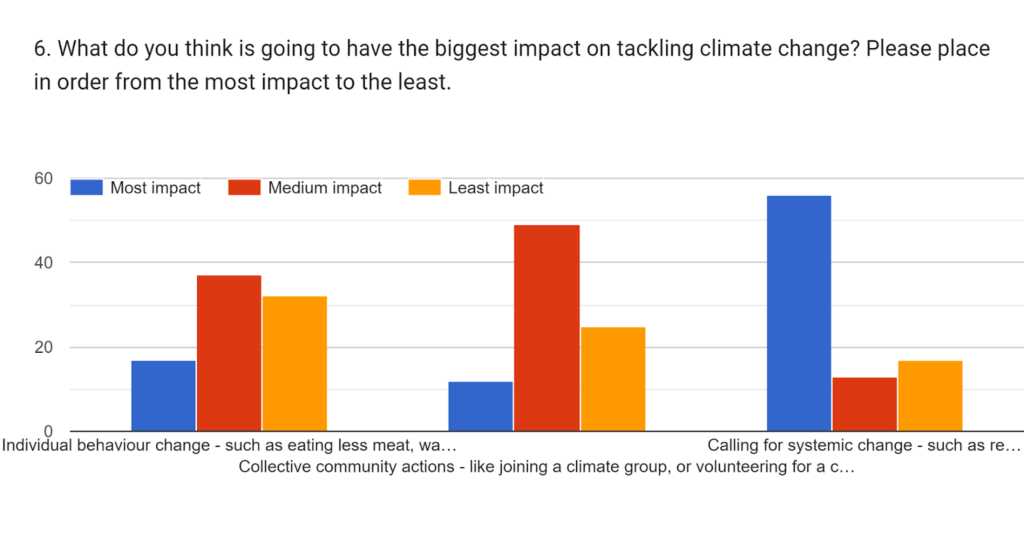
- A general pattern is that people perceive that action for systemic change would have the most impact, community level change would have medium impact and individual behaviour change would have least impact on tackling the climate crisis. But all are perceived as having some impact.
- There is a mixture of feeling about which of these 3 types of action is easier or harder to do.
- WinACC resources seem to be effective in helping people to take action. But people also get help from many other organisations.
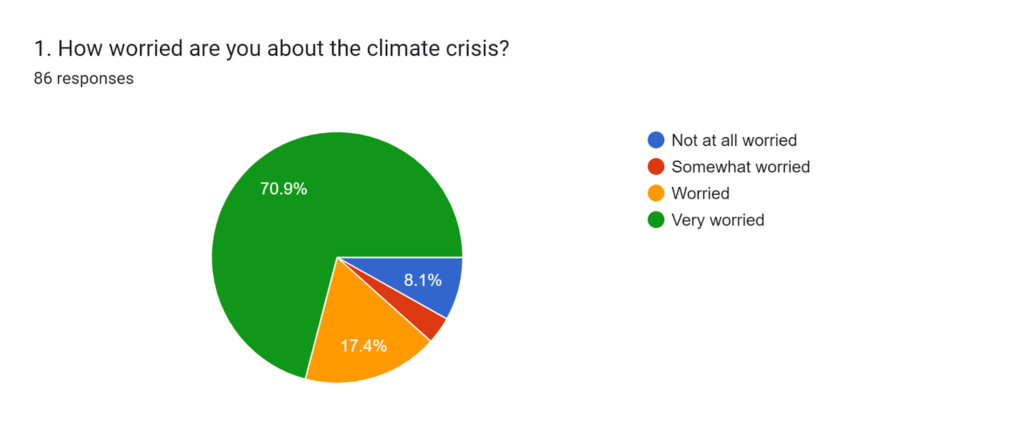
92% of people say they are worried about the climate crisis (71% say they are very worried).
This indicates a context in which WinACC’s existence and work is as relevant as ever.
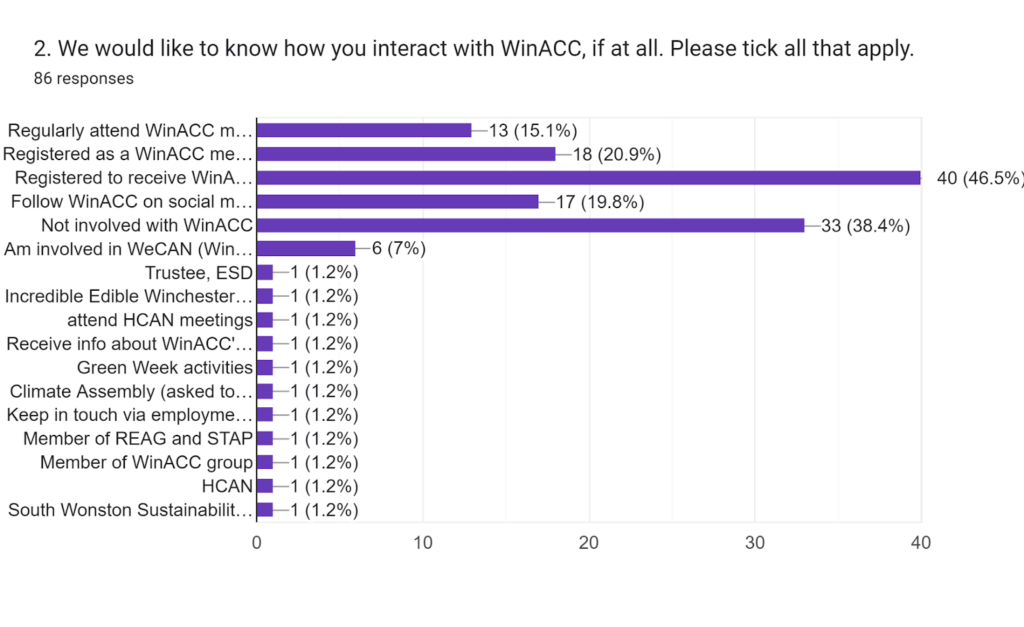
Note that 33% of the survey participants have no involvement in WinACC.
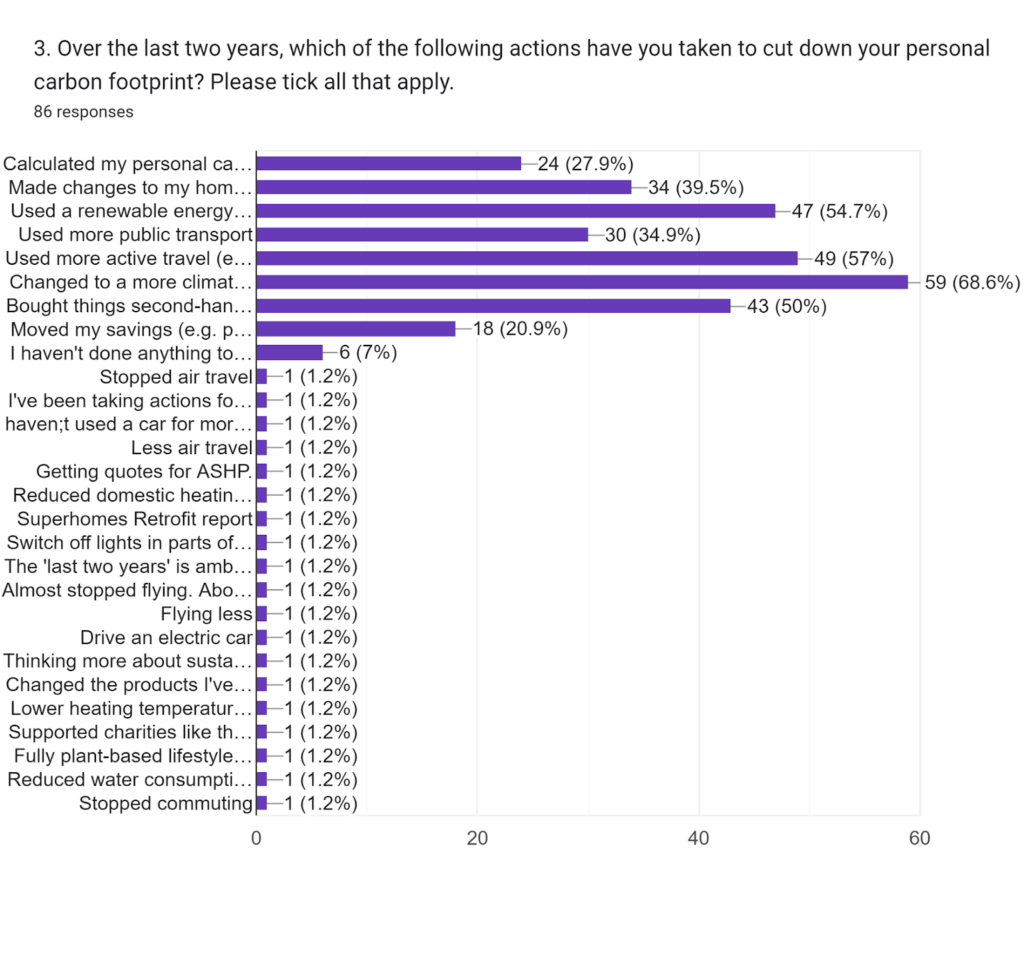
This question was about individual personal action.
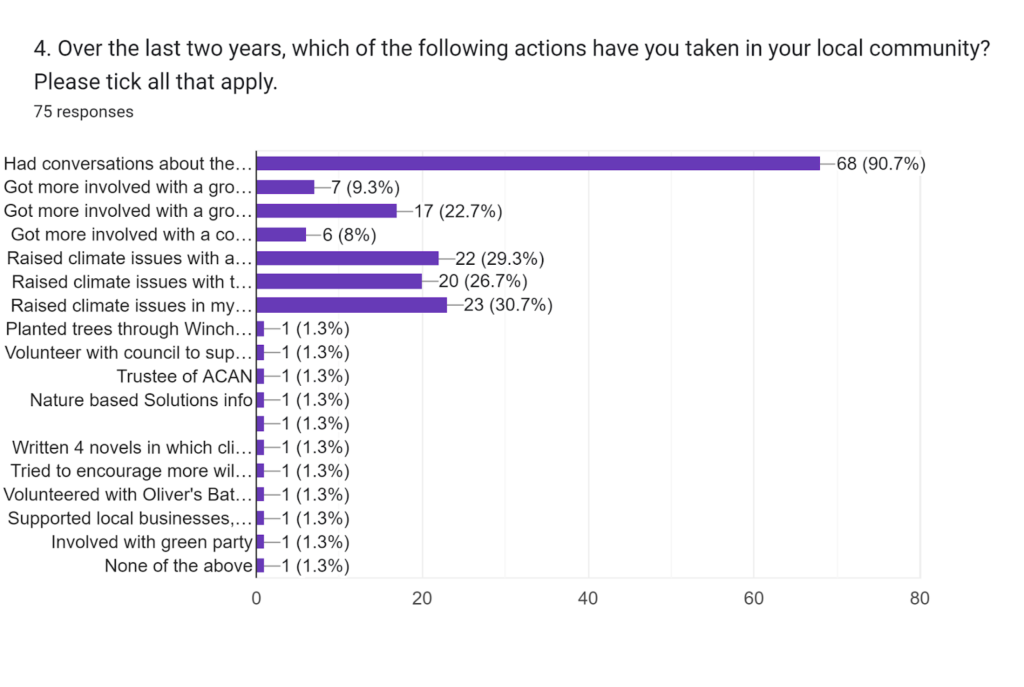
This question is about community level action.
86% have taken action on climate change in their community over the last 2 years… including having conversations with others about the issues, joining local sustainability groups or parish councils, getting involved in local groups growing food or promoting active travel, working on community energy schemes, planting trees with Rotary, becoming a trustee of a climate change organisations.
Note that 49 people (57% of annual survey) report more active travel behaviour following involvement with WinACC and 17 people (23%) say they have joined a group to promote active travel.
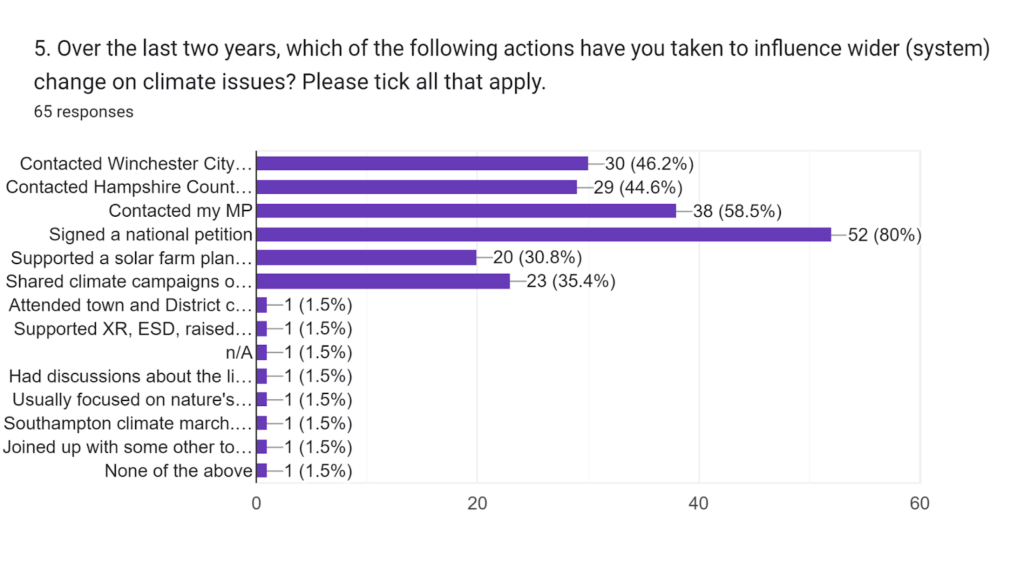
This question shows a distinct willingness of people to engage in action for systemic change.
46% of this annual survey report contacting Winchester City Council through consultations etc to influence transport infrastructure (30 people).
45% report contacting Hampshire County Council (including responding to consultations).
29% people have raised climate issues with another community group (cultural/church/etc)
31% supported a solar farm application.
58% contacted MP about the climate crisis.
80% signed a national petition about the climate crisis.
In summary, answers to the last 3 questions (q3,4 and 5) show that:
Less than 10% of these people report that they have taken no action in the year (e.g done nothing to reduce their carbon footprint, taken no action in the local community, taken no action to influence wider system change).
Over 90% took action of some kind – suggesting that people’s worry/anxiety leads them to take action – that people are motivated to do something. This suggests that people’s well being is improved by taking action.
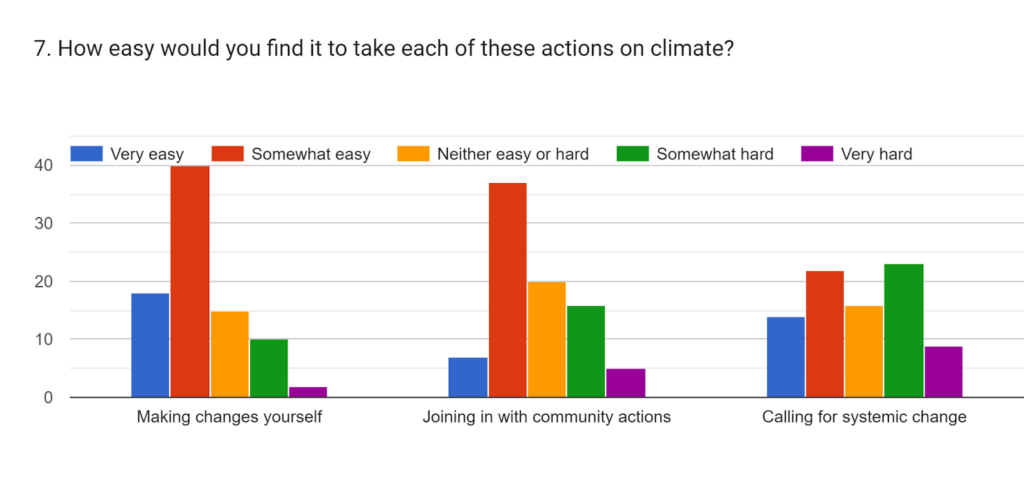
38 people took up the invitation to explain why they would find these things easy or hard. These are their comments:
- The individual changes vary in difficulty – some changes are simple (e.g. Turning off lights and appliances when not in use, or cooking in an energy efficient way) whilst others, such as recycling in the Winchester area, are made much harder by the awful local systems that are a significant barrier for people to make what should be straight forward changes to reduce waste and increase recycling. There are lots of great community initiatives about so it’s easy to take action once you actively look for opportunities to get involved. Calling for systematic change feels much harder – partly due to knowing who to speak to and partly because motivation to call for change diminishes when raising the issue seems to bear no results. I started conversations with councillors and have had other email exchanges for nearly two years regarding recycling issues in Hampshire and no progress seems to have been made. If anything, it has gotten worse as my closest plastic drop off point (Sainsburys Badger Farm) has now stopped accepting this.
- Very easy to be motivated — but they all involve time/work so less easy!
- Feel I can articulate the need for systemic change but getting practical responses is the challenge!
- None of these are difficult if you have the will to do them.
- Want to do anything I can
- Already doing – this seems to be about starting to do it?
- systemic change hard with current MP and Govt – we need hampshire/winchester to be an example of what good looks like in terms of decarbonising and creating a place to live which with cleaner air, better standards of living, good transport etc
- I am retired and have time. 4 grandchildren are motivation.
- Systemic will have reach and biggest impact and therefore motivates me more than any other action. Local and individual change is tantamount to herding cats esp. in energy, food and financial crises with low bar levels of knowledge and ability to get persuasive action done at scale.
- Finding enough h time.
- No public transport and mobility issues make it very upsetting when these options are demanded. Not everyone can walk, cycle or give up their cars but nobody suggests any other options. Disability creates isolation and however much I change my lifestyle I cannot physically do most of the things demanded.
- I am unable to cut down on meat and dairy as my diet needs these to keep me alive. Due to having very little bowel I cannot eat a plant based diet, I wish more thought could be given to people like myself instead of trying to make us feel guilty for being alive! There is very bad and expensive public transport in the area and as I have mobility problems I need to drive.
- I can’t do all these to maximum effect.
- Making changes in the uk will have limited effect as it is countries like China and others that contribute far more and don’t want to change.
- Already do many things
- Other time pressures
- At the end of the day it’s money. I really want solar panels and an electric car, but even with subsidies I cannot afford it, as an example. I want to shop better with less packing and co2 miles, but it costs more. I fully support all initiatives, but I feel powerless
- Individual changes like heat pumps are very expensive and require existing radiators and pipes to be ripped out. The property then needs to be completely redecorated. Similarly with lining internal walls with insulation. Government grants don’t cover the cost of all of the refurb required.
- The question seems to suppose a non-active baseline. If I’m doin something a lot already, I clearly find it harder to do more.
- We have a government that is influenced by the extreme right which makes it hard
- Easy given my awareness of the existential risk to the planet of not taking action.
- Too busy to join community actions. I call for systemic change in my work.
- Calling for systematic change is hard in that it’s tricky to know what actually makes a difference to an MP’s views, Government action, or multinational policies.
- Government won’t prioritise it
- I am already doing things such as not eating meat, not flying, using renewable electricity supplier so there is not much else i can do personally
- Making changes yourself is instant progress
- Lack of time!
- I have already made many changes, often they felt difficult at the time but we have adapted well. But this doesn’t have any impact.
- Making food changes is difficult as my family are not keen to drop meat from their diet. I would join community actions if it fitted in with my work and family life. My voting choice would be influenced by their stance on climate change.
- Community groups tend to be somewhat chaotic – difficult to get much done. Calling for systemic change is relatively easy, but I’m not convinced it achieves much, and may even be counterproductive (eg so-called ‘direct action’ by XR) – actually making meaningful progress on systemic change is (very) much harder
- My job involves calling for systemic change, yet changing my own habits is not easy
- Too many issues to take up with HMG! Feeling of never being listened to. Lack of personal time
- I often don’t feel like I have a good enough understanding of proposed legislation etc to lobby MP’s.
- Time. As a family we have taken personal actions for many years and do all we can. It takes a lot of time to campaign and we have busy jobs and are raising kids.
- Calling for system change is important but as this questionnaire describes it it stops short of getting elected yourself or doing political campaigning. This has always been a weak point of WinACC trying to be friends with all parties which in my view is not possible or dishonest even.
- What’s the point? Nothing will change. Society will just adapt to changes as we have for millennia, without all the hysterical crying wolf.
- I dont cope well with groups
- I’m in a bubble of people who live and think ways to reduce carbon emissions, waste, encourage wildlife. I have the interest. I have the confidence to take part in consultations.
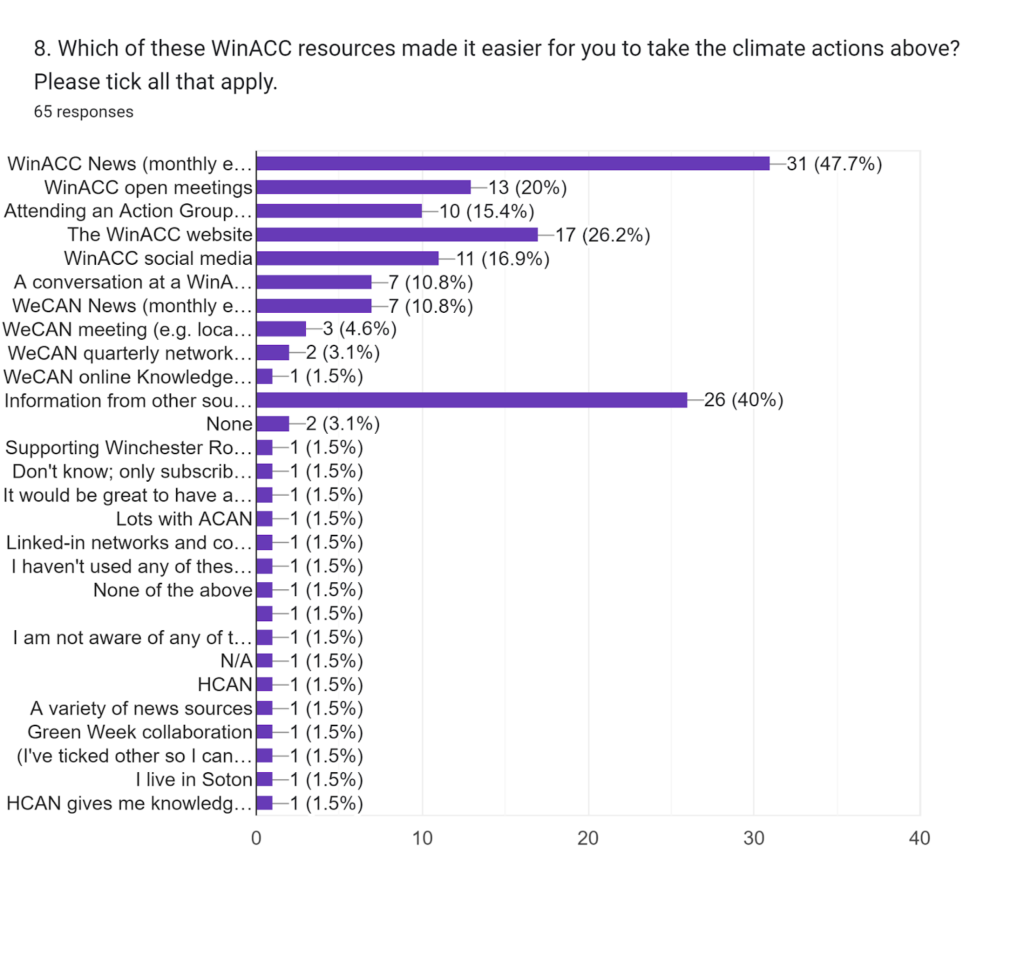
Only 5 people people said ‘none’ of WinACC’s resources helped or ‘they didn’t know of any of them’.
More than 90% of those answering the question about which WinACC resources made it easier to take climate action mentioned one or more.
Details of which WinACC resources made it easier to take climate actions:
WinACC news – monthly newsletter: 48%
WinACC website: 26%
WinACC Open meetings : 20%
WeCAN mailings/knowledge hub/meetings: 20%
Attending Action Groups: 15%
WinACC social media 17%
Respondents were invited to list other source of information which they found helped them to take action:
- Hampshire County Council Waste Prevention Team are super helpful and informative.
- XR, JSO, Christian Climate Action, Christian Aid, the Amos Trust
- Provided useful updates for information and campaigning (rather than ‘helped me make changes’): Hants & IOW Wildlife Trust, Friends of the Earth, Compassion in World Farming, Plant Life, Butterfly Conservation
- Greenpeace; Friends of the Earth; Population Matters; Chase Africa; HIWWT; Amnesty International; VSO; Woodland Trust; ORCA; 38Degrees; Viva! – various petitions and support
- FoE
- Fossil Free. XR. HCAN. Dirty Money.
- ACAN
- RSA, Royal Society, Green Party and professional sustainability networks.
- Info on renewable energy and ASHP advice websites.
- Carbon Literacy Training was useful (organised through work)
- Generally watching and reading the news about global issues is more relevant
- Engineering institute as a member
- Newspaper
- Science organisations, internet, advice from people who have made changes. Had solar panels etc for 10 years. Know what we will do next.
- Guardian, BBC, Parish Mag
- Friends of the Earth, CES, OVO
- Extinction Rebellion
- Octopus Energy, Greenpeace, Friends of the Earth, Quakers (non-violent direct action)
- WWF carbon footprint calculator, guardian articles
- I am subscribed to a wide range of news sources and am a member of various groups related to my work.
- South Wonston Sustainability Group
- The Dorset Green Living course (which a group of us did online during the pandemic) with detailed information and discussion on food, transport, energy, waste, water, community – we made changes in all these areas of life. Winchester Green Week – learnt to intentionally support businesses that focus on sustainability; thought more about the arts in relation to climate crisis; advice on biodiversity in garden; connectivity and spirituality as enablers of change. Eco Church – is providing a focussed pathway for our church community.
- Greenpeace Friends of the Earth
- Scientific research
- Greenpeace
- Avaaz, Carbon Brief, Greenpeace, 38Degrees, The Conversation
- Possible, Flight Free, FOE, Greenpeace, Wildlife Trust
- HCAN. Inspired by volunteers attending. Info too. BIES & transport data. Transition So’ton. Ditto. Wildlife & food growing
- South Wonston Sustainability
- Aim Hi Earth WRAP HCC’s SMART LIVING Ellen McArthur Foundation Sustainable-ish
- Our own reading and research
- XR, Operation Noah, Cycle Winchester, Green Party, Greenpeace, Friends of the earth
- HCAN , Friends of the Earth, Local Community groups I volunteer with.
9. What other resources could WinACC provide that would help you take further climate action?
- Networking about local events
- Please continue with updates on local climate action and campaigns.
- Don’t know.
- Not at the moment
- Mailing lists for specific topics; loose groups/mailings on topics not yet covered eg investment/money; health
- Nature based Solutions guidance on calls to holistic environmental action with focus on how to get systemic change done. Less silo thinking and more joined-up action with recognition of changing mindsets to consider actions on triple challenges together – climate, biodiversity and pollution. Stitch Individual, Community and Big picture thinking together to move the reach and engagement dial demonstrably.
- Get the LA and transport companies to invest in integrated sustainable public transport.
- Public transport. U
- Install solar panels on council properties
- A climate check a trade of recommended suppliers.
- WinACC seems to be a Winchester city focused organisation. Could there be more for we rural folk ?
- Easier to understand lifestyle choices….
- Campaign more vocally in the local area
- Invitations to participate in local direct action. Information on global culprits, and help with tackling the global systemic causes of the climate crisis.
- Carbon footprint app linked to practical reduction ideas that are local? (Quite a big piece of tech I know!)
- Information about local actions I can take, especially quick ones like petitions
- I think I need to make more use of what you already provide.
- Getting more young people involved in the area, and perhaps joining forces with XR etc for bigger events.
- I can’t think of anything
- Directory of local tradesman doing renewable energy work
- I have just now signed up and will look at what other action you recommend
- Just improve our own emissions for the sake of our health.
- Information about who is doing what within WinACC. Too many silos and information blackouts.
- I don’t think it is a lack of resources which is stopping global or local action on climate !!
- Easy to find guidance on the website, including links to other sites that can help.
- Scrutinise councillors (and the MP) more with regards to how they voted on important climate related issues
- I’m not closely linked to Winchester but I am keen to be knowledgeable about HCC’s progress in reaching Net Zero
10. Is there anything else you would like to tell us?
- Would be good to join up with other relevant, local organisations, as much as possible – where aims overlap and joint working can be supported ( to use resources as efficiently as possible and maybe increase a broader front of public awareness about the issues).
- In my view, carbon neutral by 2050 is impossible, unless the economy becomes secondary to the environment. How will that happen?
- Get great help from Stuart in getting things moving with parish council
- So glad WinACC has found its feet again
- ACAN keeps me busy
- Think about Life Cycle (cradle to cradle) Whole life Carbon and biodiversity in all conversations and actions. Doing otherwise is sub-optimal. Of course this means translating this thinking and action into lay and intelligible speak for all. :-
- We are not doing enough!
- I do not believe the cause is helped by the actions of some of the more extreme protest groups (e.g. Extinction Rebellion, Just Stop Oil). The issue of climate change will not be successfully addressed by simplistic sloganeering. Instead folks need to be nudged/encouraged to do the right things. Let’s do more to make recycling easier (e.g. plastic food tubs) and to encourage the use of electric vehicles (rather than demonising the use of all vehicles) and to help folks understand the pros and cons of alternative domestic heating technologies (e.g. heat pumps, hydrogen etc.).
- I think a lot of government plans haven’t been thought through, eg electric cars
- Reduce the population of the world
- Thank you for all your work.
- More on nature please. It’s not just about stopping flying etc, the big companies have to stop what they’re doing before we see big changes there. But we can all do out bit in our gardens i.e stop using pesticides and adopt wildlife gardening techniques. Unfortunately yes it does mean some slug and snail damage but so what? Better than killing pollinators.
- Nothing we can do in global terms. GB contributes 0.01percent of the global problem. Until China, Australia etc do much more, we can only affect it with words.
- No
- Thank you for everything you do. I would like to get involved more.
- Don’t give up! I think (hope) you are having more effect than you’d credit
- I find it so frustrating that more is not being done nationally/worldwide to switch to plant based living
- Thanks for all the great work you are all doing!
- There is no climate crisis other than the scaremongering we are subjected to.
- Winacc is great but it misses the opportunity to put real pressure on elected politicians because it tries to be apolitical. I can’t think of a successful campaign group that is apolitical.
- I wish I could believe that any of these measures will make some difference.
- The council has not responded to queries and concerns I have raised. This is discouraging.
- As part of a Friends of Earth group it is good to keep in touch with other groups.
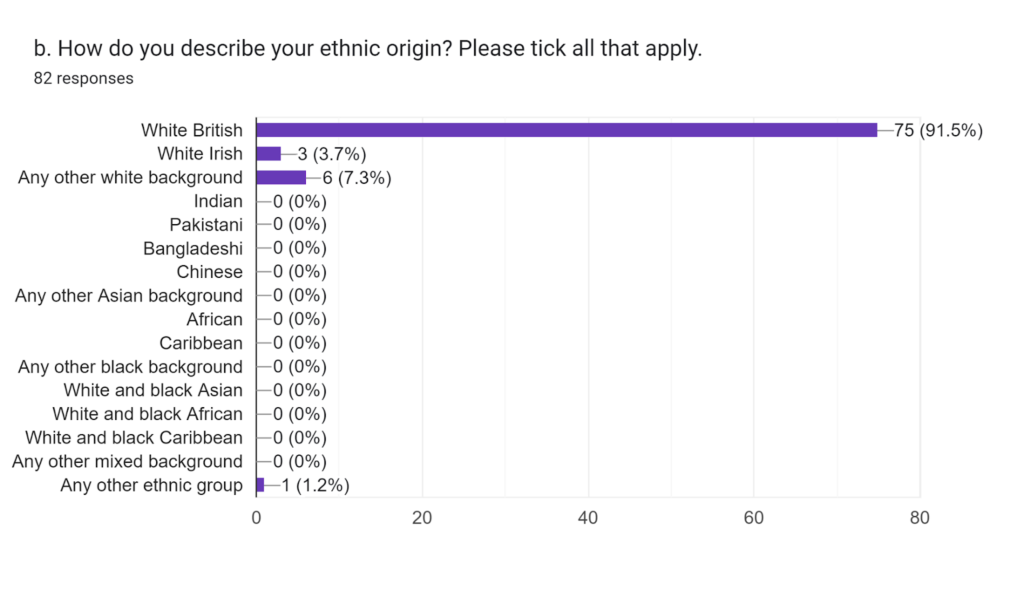
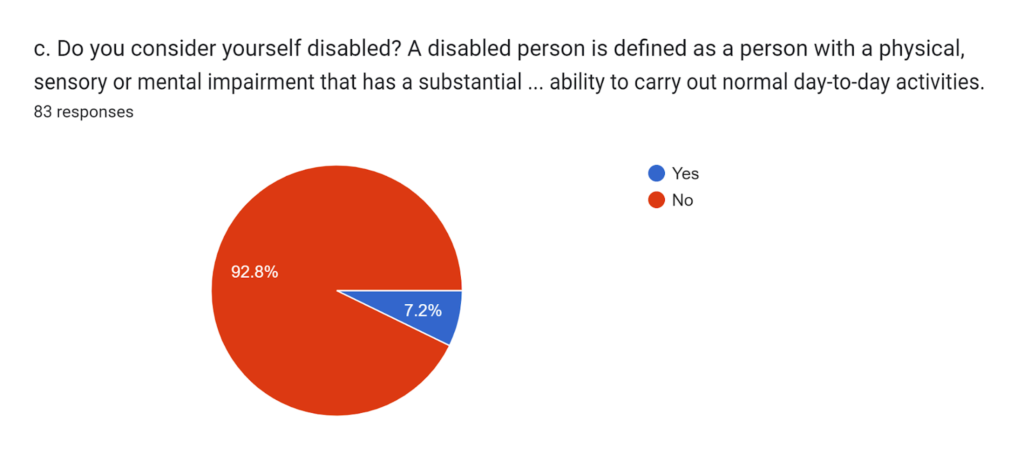
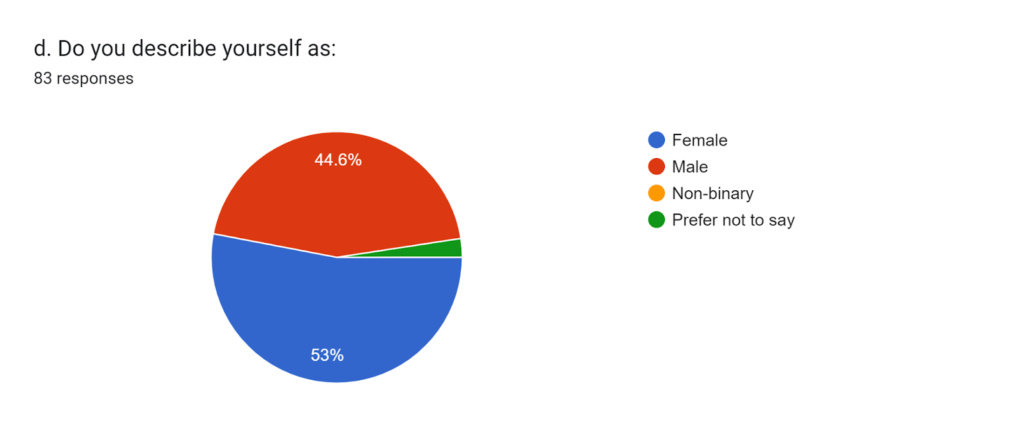
Information about who answered the survey:
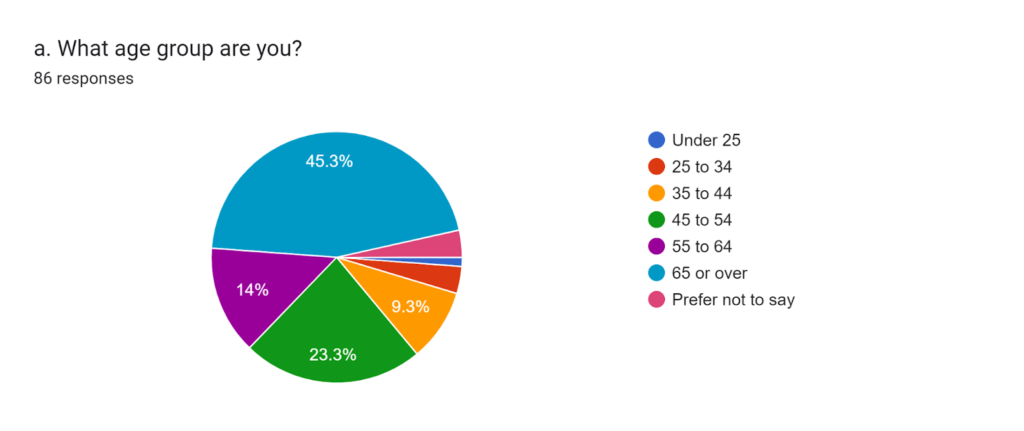
Nearly half the respondents are over age 65.